



Moving to university in the UK means handling your own money for the first time. Rent, food, transport, bills — it all adds up faster than most students expect. Knowing your numbers before you arrive saves a lot of stress later.
The average student living costs in the UK sit at around £1,142 a month, but that figure changes significantly depending on where you study and how you live. This guide breaks everything down so you can build a realistic budget before your first term starts.
What Are the Average Student Living Costs in the UK?
Most students living outside London can manage on £900 to £1,300 a month. This usually covers rent, food, transport, bills, and some social spending. Students who share housing and cook at home regularly spend less than that figure suggests.
London is a different story. The cost of living in London for students sits between £1,710 and £2,760 per month in 2026. Location is the single biggest factor in your monthly budget, and it is worth thinking carefully before you commit to a city.
The average student maintenance loan in the UK comes in at just £640 a month, which falls around £502 short of average living costs. Over half of students — 56% — say the maintenance loan is not big enough, and 52% rely on parents for extra support, averaging £146 a month.
Accommodation: Your Biggest Monthly Cost
Rent takes the biggest chunk out of any student budget, averaging around £529 a month across the UK. That number climbs fast in cities like London and drops considerably in places like Sheffield, Nottingham, or Hull.
University halls are mid-range for price, but their all-inclusive nature — covering utilities, WiFi, and security — makes budgeting much simpler. Private shared houses are usually cheaper but come with separate bills to manage. Studios offer full privacy but cost the most per person.
Choosing a shared house instead of a studio can save £200 to £400 a month. Booking early — between January and March — gives you access to better-priced rooms before competition pushes prices up. For help comparing your options, check out our guide on university halls vs private halls.
How Much Does Student Accommodation Cost by Type?
Not all student housing costs the same, and understanding the difference before you sign anything saves real money. Here is a realistic breakdown for 2026:
Accommodation Type | Monthly Cost (Outside London) | Monthly Cost (London) |
|---|---|---|
University Halls | £400 – £700 | £800 – £1,200 |
Private Shared House | £350 – £600 | £700 – £1,100 |
Private PBSA En-suite | £600 – £900 | £1,000 – £1,500 |
Studio (Private) | £800 – £1,100 | £1,200 – £2,000+ |
Always check what the rent includes before comparing prices. A university hall at £600 a month with all bills included can be cheaper in total than a shared house at £450 a month with separate gas, electricity, and broadband on top.
Food and Grocery Costs
Groceries are the second biggest student expense, coming in at around £146 a month — roughly £34 a week for a typical food shop. That is manageable if you plan meals in advance and shop smart.
Shopping at low-cost supermarkets such as Aldi and Lidl can significantly reduce your weekly bill. A realistic grocery budget for a student outside of London can range from £35 to £50 a week if you cook meals from home. Students who eat out frequently can see food costs rise to £400 or more per month.
Batch cooking, meal planning, and splitting grocery shops with housemates are the most reliable ways to keep food spending low. The gap between a student who cooks most meals and one who eats out regularly can easily reach £150 to £200 a month across a full academic year — money that adds up fast.
Bills and Utilities
Students in shared houses typically spend around £69 a month on bills, covering gas, electricity, water, broadband, and a TV Licence. Students in university halls or purpose-built accommodation usually have these included in their rent, removing the need to manage separate accounts.
Internet alone averages between £20 and £40 a month when paid separately. If you are moving into a shared house, always confirm what is and is not included in the rent before signing. A room that looks cheap can become significantly more expensive once bills are added on top.
One important thing to sort early is council tax for students. Full-time students are usually exempt, but you may need to submit proof to your local council after moving in. If one person in your shared house is not a full-time student, the rules change, so check before you sign a joint tenancy.
Transport Costs
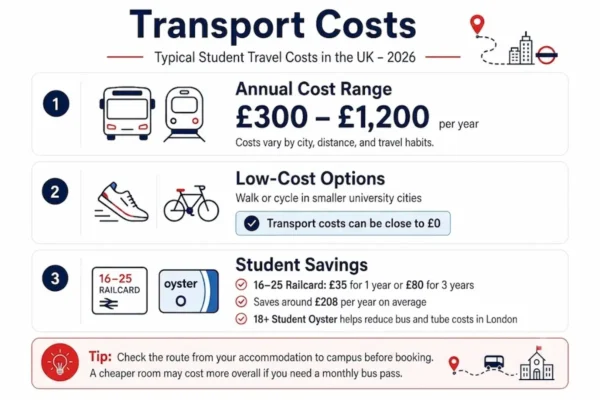
Transport costs vary dramatically depending on city size. You can expect to pay between £300 and £1,200 annually for transport. If you live in a smaller university city, you can likely walk or cycle everywhere, and your transport costs will be close to zero.
A 16-25 Railcard costs £35 for one year or £80 for three years and gives you a third off most rail fares across Great Britain, saving you around £208 per year. In London, the 18+ Student Oyster card reduces the cost of bus and tube travel significantly.
Before choosing accommodation, check the actual route from your front door to your main lecture building. A cheaper room that adds a £60 monthly bus pass to your costs may not actually be cheaper overall when you calculate the full annual spend. Understanding the full picture of accommodation in the uk for international students helps you make a smarter decision before you commit to anything.
Social Life and Entertainment
Students spend around £61 a month on going out, more than triple what they spend on course materials each month. Social spending is one of the easiest categories to overspend in, especially in the first few weeks of term when everything feels new and exciting.
Setting a weekly social budget and sticking to it makes a real difference over a full academic year. Student nights, free campus events, and university society activities are all significantly cheaper than standard nights out. Most universities run free or low-cost events throughout the term that are just as social without the price tag.
Entertainment costs like gym memberships, cinema, and streaming subscriptions also add up. Many gyms offer student rates, and your university may have its own gym included in student fees. Always check what is available through the university before paying for external memberships.
How to Build a Realistic Weekly Budget
The most practical way to manage your money at university is to work from a weekly number rather than thinking in monthly or termly totals. When your maintenance loan arrives at the start of term, it can feel like a large amount, but it needs to stretch across every week of that term, including reading weeks and exam periods.
Take your total income for a term. Subtract your essential expenses and divide by the number of weeks you will be away. If you have £2,000 to spend across a term and your essential expenditure comes to £1,000, you would have around £80 per week left for non-essentials. A student budgeting planner can also help you check your weekly spending before term starts.
Track your spending weekly for the first month. Most students who go over budget do not realise it until the money has already gone. Simple tracking, even just checking your bank app daily, catches problems early and stops small overspends from becoming big ones.
Student Discounts That Actually Save Money

Using your student card, you can save money on clothing, technology products, cinema tickets, nights out, transport, and trains. While these discounts may appear small, they compound over the year and can save you significant amounts.
UNiDAYS, Student Beans, and TOTUM are the three main student discount platforms in the UK. Signing up is free and takes a few minutes using your university email. Between them, they cover most major retailers, software providers, food brands, and entertainment services.
Microsoft Office is free for most UK university students through their institution. Check your university email login on the Microsoft website before paying for any subscription. Many students pay for software they could access for free through their university throughout their entire degree.
Building an Emergency Fund
One habit that separates students who manage money well from those who struggle is keeping a small emergency fund separate from their regular budget. Unexpected costs happen at university a broken laptop, an emergency trip home, a medical expense, or a lost item.
Contributing just £5 to £10 a week to an emergency pot gives you a small financial buffer for unforeseen expenses. It seems like very little, but over a full academic year, that adds up to £200 to £400 sitting quietly aside for when you need it.
If money gets seriously tight, most UK universities have hardship funds for students facing genuine financial difficulty. Contact your student services team early if you are struggling; they can point you toward financial support options that many students do not know exist.
Part-Time Work and Extra Income
Part-time work is common among students, with most roles paying between £9 and £15 an hour. Hospitality, retail, and campus jobs are the most accessible, while tutoring or specialised freelance work tends to pay more.
International students on a student visa can work up to 20 hours a week during term time worth factoring into your budget if you are planning ahead. Research consistently shows that working more than 20 hours a week during term time can negatively affect academic performance, so finding the right balance matters.
Selling items you no longer need, completing online surveys, and freelancing in skills like graphic design or writing are all ways students top up their income without committing to a fixed schedule. Every extra £50 or £100 a month adds real breathing room to a tight budget.
Student Living Costs by City
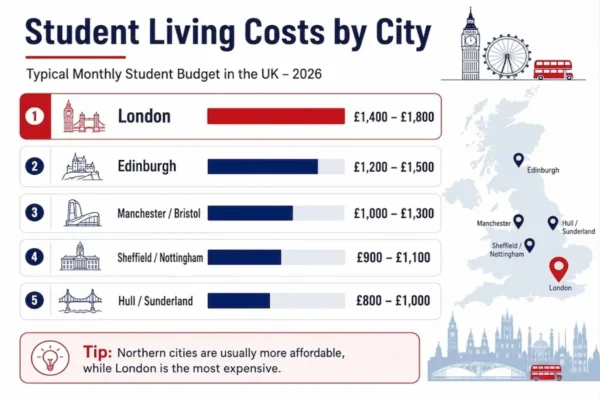
Where you study changes your monthly budget considerably. Here is a realistic comparison for 2026:
City | Monthly Budget (approx.) |
|---|---|
London | £1,400 – £1,800 |
Edinburgh / Oxford | £1,200 – £1,500 |
Manchester / Bristol | £1,000 – £1,300 |
Sheffield / Nottingham | £900 – £1,100 |
Hull / Sunderland | £800 – £1,000 |
London costs are typically £300 to £500 more per month than most other UK cities, driven mainly by higher rent and transport. Northern cities like Sheffield, Newcastle, and Hull consistently offer the most affordable student experience. If you are still deciding where to study, check our student accommodation guide for a full breakdown of housing options by city.
Common Budgeting Mistakes Students Make
Most students who struggle financially make the same few mistakes. Spending freely in the first few weeks of term is the most common freshers’ week and settling-in costs can drain a significant chunk of your budget before term even properly begins.
Not reading your tenancy agreement carefully is another costly mistake. Hidden charges for laundry, parking, or utility caps can add costs you did not plan for. Always read the full contract before signing anything, and ask questions if something is unclear.
Ignoring student discounts is a surprisingly expensive habit. The difference between paying full price and student price on software, travel, food, and entertainment adds up to hundreds of pounds across a year. Get into the habit of checking for a discount before every purchase. It takes seconds and saves real money.
FAQs
How much do student living costs in the UK average per month?
Around £1,142 a month on average, though this varies by city, accommodation type, and lifestyle choices.
Is the student maintenance loan enough to cover living costs?
For most students, no. The average loan is around £640 a month, which falls well short of average living costs across the UK.
Which UK city is cheapest for student living?
Northern cities like Hull, Sunderland, and Sheffield are consistently the most affordable for student living costs in 2026.
Do students pay council tax in the UK?
Full-time students are usually exempt, but you need to submit proof to your local council after moving in.
How can I reduce my student living costs in the UK?
Share accommodation, cook at home, use student discount platforms, book your room early, and consider part-time work within your visa or schedule allowance.

