



Moving into student accommodation for the first time is exciting, but it can also feel overwhelming when you are trying to figure out what to pack, what to sort beforehand, and what to do on the day itself. Most students either overpack and run out of space, or forget something important and spend their first week running around shops buying basics they should have brought from home.
A solid student accommodation checklist fixes both problems before they happen. This guide covers everything from documents and bedroom essentials to admin tasks, safety checks, and settling in tips. Whether you are moving into university halls, a private shared house, or purpose-built accommodation, the same core preparation applies across all housing types.
When Do Students Move In?
Most UK universities allow first-year students to move into accommodation a few days before the academic year begins, usually between mid- and late September. This timing is deliberate, giving you space to settle in, meet your flatmates, and attend orientation events before lectures start. International students are often able to arrive earlier, sometimes from the start of September, to allow extra time to adjust to a new country.
Move-in days at university halls are usually organised in allocated time slots, often running from 8 am to 6 pm. Many halls have a goods lift reserved for moving furniture, and some provide trolleys to speed things up. Confirming your arrival slot, your key collection process, and any parking arrangements in advance makes the day itself far less chaotic. If you miss your slot, you may face a wait, so treat the booking confirmation as a hard deadline.
Private accommodation works differently. There are no organised slots, so confirm your move-in date, key handover time, tenancy start date, and deposit rules with your landlord before booking transport or asking family to travel with you. This is especially important when comparing UK accommodation options as an international student.
Before You Move In: Documents to Sort First
The most important things to prepare before move-in day are your documents, not your bedding or kitchen items. You need your university acceptance letter, accommodation contract, and a valid photo ID like a passport or driving licence, as these are often required at check-in to collect your keys and verify your identity with the accommodation team.
International students should also bring their visa documentation, proof of funds, travel insurance details, and any relevant health records. If your university requires registration on arrival, having all of these ready in one folder, physical or digital, saves a lot of time during what is already a busy and tiring first day. Storing digital copies in cloud storage gives you a reliable backup if anything gets misplaced in transit.
Your student finance confirmation, scholarship letter, or bursary details are also worth having to hand. These may be needed for banking setup, university administration, or welfare support, and not having them accessible when asked can slow down processes you want sorted quickly in the first week.
Bedroom Essentials Checklist
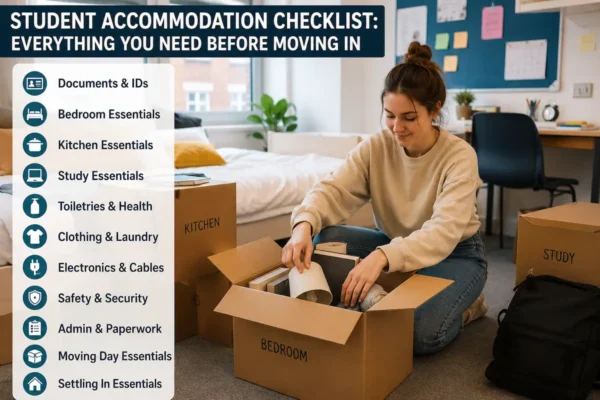
Your room in university halls will usually come with a bed frame, mattress, desk, chair, and wardrobe but almost nothing else. Bedding, towels, and personal items are your responsibility, and most providers do not supply them even if the room is described as fully furnished. Assuming otherwise is one of the most common and easily avoided move-in mistakes. Pack at least two sets of bed linen so you can keep one clean while the other is in the wash.
Bring a duvet appropriate for the season, as UK winters can be cold and student accommodation heating varies significantly between buildings and contracts. A mattress protector is also worth adding to the list, as it keeps your mattress hygienic across the full academic year and can make a real difference to your deposit return at move-out.
Beyond bedding, bring your personal items, a few home comforts like photos or fairy lights, and storage solutions that work within a small room layout. Under-bed storage boxes, over-door hooks, and desk organisers all make a genuine difference to how liveable a small student room feels from the very first day you arrive.
Kitchen Essentials Checklist
Most student halls and shared houses have a communal kitchen with a cooker, microwave, and fridge but no cookware, cutlery, or food supplies. You and your flatmates are each expected to bring your own equipment, and arriving without the basics means either eating out at extra cost or living on snacks until you find time to sort a proper shop.
Pack two of each essential item, two plates, two bowls, two sets of cutlery, two mugs, so you always have a clean set available between washes. A non-stick frying pan, a medium saucepan, a chopping board, and a sharp knife cover the vast majority of meals you will actually cook as a student. Everything else can be added later once you know what you are missing.
Beyond bedding, bring your personal items, a few home comforts like photos or fairy lights, and storage solutions that work within a small room layout. Under-bed storage boxes, over-door hooks, and desk organisers all make a genuine difference to how liveable a small student room feels from the very first day you arrive.
Bathroom Essentials Checklist
Whether you have an en-suite or share a communal bathroom, all your personal bathroom supplies need to come with you. Student accommodation never provides toiletries, and arriving without them means an immediate unplanned trip to a shop in an unfamiliar city on one of the busiest days of your year.
Pack your toothbrush, toothpaste, shower gel, shampoo, conditioner, deodorant, and any skincare or grooming products you use daily. A shower caddy or toiletry bag keeps everything organised and makes the walk to a shared bathroom much more practical. If you are in a communal bathroom, shower-friendly footwear like sliders is also a sensible hygiene choice that most students only think of after they needed it.
Bring enough toilet roll for at least the first week, along with a hand towel and a bath towel. Some halls provide a starter roll but this varies and cannot be relied on. Having these basics covered means you are not scrambling to find a corner shop on your first night in a new city after a long and tiring moving day. Not sure which accommodation type suits you best? Read our guide on university halls vs private halls before you sign anything.”
Study Essentials Checklist
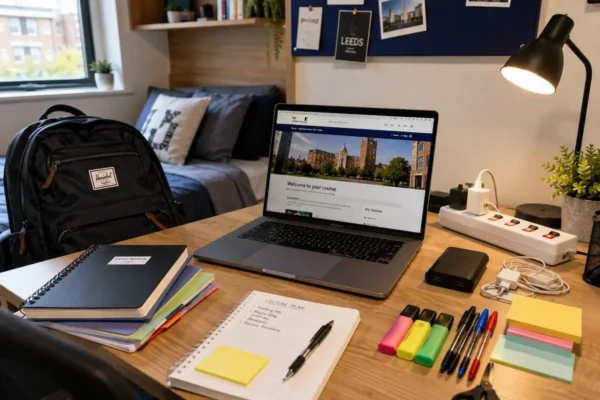
University life runs largely on a laptop, so this is the single most important piece of equipment to prepare before you leave. Check that it is charged, backed up, and working properly before your move-in date, as tech problems on the first day of term are stressful and expensive to sort quickly in a new city.
Bring a sturdy bag or backpack that fits your laptop comfortably and has room for notebooks, chargers, and daily essentials. A portable charger is useful during long days on campus where plug access is limited. An extension lead with surge protection is one of the most commonly forgotten university essentials, and it is well worth packing since most student rooms have fewer sockets than you need for a full study and personal setup.
Stationery matters more than most students expect before they arrive. Pens, notebooks, highlighters, sticky notes, folders, and scissors are all things you will reach for regularly, and buying them last minute from a campus shop costs considerably more than packing them from home before you leave.
First Day Admin Checklist
Move-in day comes with a list of admin tasks that are easy to overlook when you are busy unpacking and meeting people. Sorting these in the first few days makes the rest of the term significantly smoother and prevents problems from quietly building up until they are harder to fix.
Register with a local GP as soon as possible after you arrive. The NHS recommends this as a priority for all students moving to a new area, especially those coming from abroad. Your university can usually direct you to nearby practices, and registration can take a few days to process, so starting within the first week means you are covered quickly if you need medical support during the term.
Apply for a council tax exemption if you are renting privately. Full-time students are usually exempt, but you need to submit proof to your local council after moving in. If everyone in your shared house is a full-time student, one person can often handle the application for the whole group. Agree on this in the first week to avoid unexpected bills arriving later in the year.
Safety Checks Before You Unpack
Before you start filling drawers and hanging clothes, spend a few minutes checking the condition of your room and any shared spaces you are responsible for. This one step protects your deposit and flags maintenance problems early, before you risk being blamed for damage that existed before you arrived.
Take clear photos of every wall, surface, carpet, piece of furniture, and appliance in your room on move-in day. Send these to your landlord or accommodation provider by email on the same day, and save copies in cloud storage. These photos are your strongest protection if there is any dispute about your deposit at the end of the tenancy, and without them, your position in any disagreement is much weaker.
Check that smoke alarms, carbon monoxide detectors, and fire escape routes are all in place and clearly marked. If anything looks broken, missing, or unsafe, report it in writing using the maintenance system on the same day rather than waiting. A clear written record of existing problems from day one prevents any ambiguity about responsibility later in the tenancy.
Bills and Utilities Setup
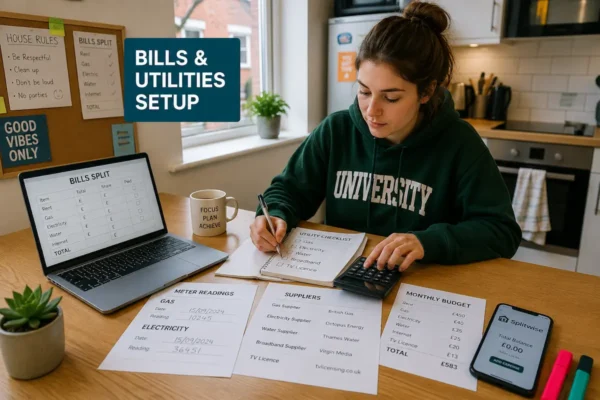
If you are moving into university halls or purpose-built accommodation, bills are usually included in your rent. Confirm this before arrival so you know exactly what you are paying and what is already covered, as some halls have fair usage caps on electricity that can catch students out mid-winter. Our guide to types of accommodations for students covers what is typically included across different housing types in the UK.
If you are renting a private shared house, you will likely need to set up gas, electricity, water, broadband, and possibly a TV Licence separately. Agree with your housemates early on who manages each account and how costs will be split. A bills-splitting app or a shared notes document keeps things transparent and prevents the small financial tensions that tend to make shared living uncomfortable over time. For a full breakdown of what student bills cost month to month, check our guide on student living costs uk.
Take meter readings for gas and electricity on the day you move in and send them to the relevant suppliers straight away. This makes sure you are only charged for energy you actually use, and it prevents any confusion about costs carried over from the previous tenant. Keep records of all readings and supplier confirmation emails somewhere you can find them easily throughout your tenancy.
How to Protect Your Deposit
Your deposit is usually equivalent to four to five weeks of rent, and getting it back at the end of your tenancy depends directly on how well prepared you were at the start. The inventory check and photos you take on move-in day are the foundation of everything that comes after in the deposit process.
In the UK, deposits must be held in a government-approved tenancy deposit protection scheme. Before you sign your contract, ask which scheme your landlord uses, confirm the exact deposit amount, and understand how and when it will be returned at the end of the tenancy. Keep copies of your tenancy agreement, deposit payment receipt, and all written communication with your landlord throughout your time in the property.
When you move out, clean your room and shared spaces thoroughly before returning the keys. Focus on the oven, fridge interior, bathroom, skirting boards, and any shared areas covered by your tenancy. The move-in photos you took are your evidence, so use them to compare the condition at both ends and respond to any deposit deductions in writing with those photos attached.
Settling In: The First Week
The first week at university can feel like a lot happening at once, new city, new people, new routine, and a long admin list all at the same time. Keeping a few simple habits during this period makes everything feel more manageable and sets a solid foundation for the rest of the academic year.
Introduce yourself to the people in your flat or on your floor early in the first few days. You do not have to become best friends with everyone, but knowing who you live with makes shared spaces more comfortable and daily life noticeably easier. Agreeing on simple house rules early, covering cleaning, quiet hours, guests, and bill management, prevents most of the friction that tends to build up slowly in shared living situations over time.
Sort your university login, student ID card, and library access in the first few days rather than leaving it until you need them under deadline pressure. These admin tasks are quick when you are not stressed and genuinely frustrating when you are. Getting them done early gives you one less thing to worry about when term properly starts and workload begins to build.
FAQs
What documents do I need when moving into student accommodation?
You need a valid photo ID, your accommodation contract, university acceptance letter, and student finance details. International students should also bring visa documents, proof of funds, and health records.
What bedding should I bring to university?
Bring at least two sets of bed linen, a duvet, pillows, and a mattress protector. Most accommodation provides a bed frame and mattress but nothing else.
Should I take photos when moving into student accommodation?
Yes, always. Take dated photos of your room and shared spaces on move-in day and email them to your landlord immediately. These protect your deposit if there is any dispute at the end of your tenancy.
Are bills included in UK student accommodation?
Usually yes in university halls and purpose-built accommodation. Private shared houses typically require you to set up utilities separately, so always confirm before signing.
When should I register with a GP after moving to university?
Within the first week if possible. Registration can take a few days to process, and being registered before you need medical support matters more than most students expect.

