



Choosing between on-campus vs off-campus housing is one of the biggest decisions you will make as a student in the USA. Where you live changes your entire university experience. It affects your daily budget, your safety, how you study, and how you make friends.
Many students feel confused when they start their housing search. You have to think about costs, security, privacy, and how you will get to class. Some students love the busy vibe of dorms. Others want the quiet of a private apartment.
This guide helps you look at both options clearly. We will look at what matters most for your wallet and your lifestyle. Whether you are coming from across the world or across the country, your living space needs to be a place where you can succeed.
Students comparing housing options should first understand the main types of student accommodation in USA.
Quick Answer: On-Campus vs Off-Campus Housing
On-campus housing is usually better for first-year and international students who want convenience and a community. It removes the stress of setting up bills or finding furniture. Off-campus housing often offers more privacy, more freedom, and sometimes lower rent if you share costs with others. The right choice depends on your budget, how you handle daily tasks, and your need for personal space.
An International Student Choosing Housing in the USA
Meet Ali. He just got his acceptance letter to a large university in the USA. He is excited, but he also feels overwhelmed. His parents worry about his safety and how much rent will cost every month.
Ali has two main options. He can pick a traditional on-campus dorm room that comes with a meal plan. Or, he can look for an off-campus shared apartment nearby.
Ali has many concerns. He worries about the total cost of each option. He needs a quiet place to study but also wants to make friends. He does not know how to handle utility bills or lease agreements yet. He also wonders if he will feel lonely living away from the school buildings.
This article uses Ali’s situation to compare both housing paths. We will look at costs, safety, and the daily reality of living in the USA. By the end, you will know exactly which path fits your needs best.
What Is On-Campus Housing?
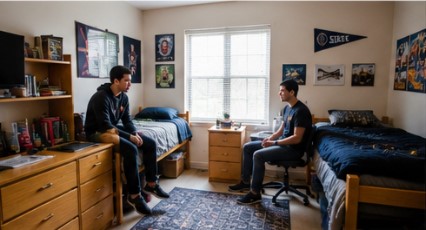
On-campus housing includes dorm rooms and residence halls owned by the university. These buildings sit right on university grounds. You are usually seconds away from your lecture halls, the library, and the dining halls.
These buildings are managed by university staff. You will likely have a roommate and share a bathroom with others on your floor. Your rent often covers your internet, electricity, and water. You will also sign up for a meal plan so you can eat at campus dining halls.
University housing has strict rules to keep everyone safe. Resident assistants live in the building to help you if you have problems. It is a very structured environment. It suits students who do not have a car, want easy access to classes, and prefer a ready-made community.
What Is Off-Campus Housing?
Off-campus apartments are one common part of student housing in USA, especially for students who want more privacy.

Off-campus housing includes apartments, shared houses, or studios located outside university boundaries. These properties are managed by private landlords or management companies. You are responsible for your own living space here.
You will sign a lease with the landlord. You usually have to pay for your own utilities like electricity, gas, and internet. You also have to buy your own furniture and groceries.
This option gives you much more independence. You do not have to follow dorm rules about guests or quiet hours as strictly. It suits older students, people who know the city well, and those who want more privacy. You need to be good at managing bills and solving your own housing problems.
On-Campus vs Off-Campus Housing: Main Differences
This table breaks down how these two housing paths compare in daily life.
Factor | On-Campus Housing | Off-Campus Housing | Best Choice |
Cost | Fixed, all-inclusive | Variable, can be cheaper | Depends on lifestyle |
Safety | High, campus police | Depends on area | On-campus |
Privacy | Low, shared rooms | High, private rooms | Off-campus |
Commute | Walk to class | Bus, bike, or car | On-campus |
Food | Meal plans included | Cook at home | Varies |
Roommates | Assigned | Chosen by you | Off-campus |
Bills | Included in rent | Paid separately | On-campus |
Lease Rules | Strictly set | Negotiable | Off-campus |
Furniture | Provided | Buy your own | On-campus |
Social Life | Built-in community | Seek your own | On-campus |
Study Environment | Busy, social | Quiet, personal | Off-campus |
Freedom | Limited | High | Off-campus |
Cost Comparison: Which Option Is Cheaper?
On-campus housing often looks expensive on paper. However, remember that it is an all-inclusive package. It includes your room, furniture, internet, security, and access to campus facilities. You do not have to pay extra for a heater in winter or a router for your room.
Off-campus rent might look lower at first glance. But you must add the “hidden” costs. You have to pay for utilities, internet, furniture, and groceries. You might also need to pay for a bus pass or gas for a car if you live far away.
Ali needs to do the math. If he picks off-campus, he saves on rent but spends more on groceries and transport. If he picks on-campus, he pays more upfront but knows exactly what he will spend for the whole semester. Do not just look at the rent price; look at the total monthly outflow.
Safety and Security
Safety is a top priority for international students and parents. On-campus housing usually has very high security. University buildings often have keycard access, security cameras, and campus police patrolling the area 24/7.
Off-campus safety depends on the neighborhood. Some areas near universities are safe, while others might not be. You have to check the lighting in the streets, how far you have to walk at night, and the quality of the building locks.
If you choose off-campus, pick a place with good reviews. Ask the university housing office if they have a list of safe neighborhoods. Always make sure your building has secure doors and functional emergency systems. Being smart about your location is key when you live off-campus.
Privacy and Roommates
Privacy is a big reason why students move off-campus. In an on-campus dorm, you might share a bedroom and a bathroom. You are surrounded by people all the time. It is great for social life but hard if you need deep, quiet focus.
Off-campus housing offers more space. You can get a private bedroom or even a studio apartment. You can choose your own roommates, which makes a huge difference. You can set your own rules about cleaning and guests.
However, sharing an apartment comes with responsibility. You have to split utility bills with your roommates. You need to talk about who cleans the kitchen and when to be quiet. Privacy costs more money, but for many students, it is worth every cent.
Commute and Daily Routine

On-campus housing is unbeatable for convenience. You can wake up 15 minutes before a class and still make it on time. You can walk to the library, the gym, and the dining hall without leaving the campus. This saves you huge amounts of time every day.
Off-campus students have to deal with a commute. You might need to take a bus, ride a bike, or use a car. Traffic can be unpredictable. You have to plan your day around transport schedules.
Think about how this affects your study time. If you live off-campus, you might have to stay on campus all day if you have gaps between classes. If you live on campus, you can go back to your room for a quick nap or a study break. Convenience is a powerful factor in your university success.
Food and Meal Plans
On-campus dorms often require you to buy a meal plan. This is very easy. You do not have to cook, shop for food, or wash dishes. You just walk into the dining hall and eat. It is great for students who are too busy to cook.
Off-campus students usually cook for themselves. This can be cheaper and healthier if you know how to cook. You can buy exactly the food you like at the grocery store. But cooking takes time. You have to prepare meals, clean the kitchen, and manage your groceries.
Ali needs to decide what he likes better. Does he want the convenience of a meal plan, or does he want the freedom to cook his own food? Both paths have pros and cons for your health and your budget.
Freedom and Rules
Living on campus feels a bit like living in a big house with strict parents. There are rules about guests, quiet hours, and even decorations on your door. You have to follow the university’s policies on everything.
Off-campus living gives you adult freedom. You can decorate your place, have friends over, and set your own quiet hours. But this freedom comes with real work. You are the one who has to call the landlord if the sink breaks. You have to pay the rent on time, or you get in trouble.
You have to decide if you are ready to be an adult. Do you have the discipline to pay bills on time? Can you keep your place clean without a resident assistant checking on you? Freedom is great, but it requires maturity.
Which Is Better for International Students?
For most international students, on-campus housing is the best choice for the first year. Moving to a new country is stressful. You have to adjust to a new culture, a new language, and a new school system.
On-campus housing removes the stress of finding an apartment or setting up electricity. It helps you meet other students quickly. You will have people around to answer your questions. It is a safety net while you learn how the city works.
Once you understand the city, you can move off-campus later. By then, you will know the safe areas, the transport routes, and how to talk to landlords. Start simple so you can focus on your studies first.
Which Is Better for First-Year Students?
First-year students benefit most from the community feel of on-campus dorms. You are all in the same boat. Everyone is new, and everyone is trying to make friends. It is much easier to meet people in a residence hall than in a private apartment.
Being close to campus also helps your grades. You are closer to the library, tutoring centers, and study groups. You are less likely to skip class if you live right next door.
If on-campus housing is too expensive, look for off-campus shared housing specifically for students. Many private student apartments offer similar perks, like community events and shuttles. But for a smooth start, the university dorms are usually the gold standard for freshmen.
Which Is Better for Graduate Students?
Graduate students often feel differently. By this stage, you have already experienced the dorm life. You probably want a quiet, private space to do advanced research and writing.
Graduate students are also older. They usually value their independence more than the “community” aspect of undergraduate dorms. Living off-campus allows you to escape the noisy undergraduate environment. You can live in a place that feels like a real home.
Many universities have specific housing for graduate students, but private off-campus apartments are also a top choice. If you want quiet and freedom, off-campus is likely the better path for your graduate years.
Common Mistakes Students Make
One big mistake is looking only at the rent. Rent is just one part of your cost. Always calculate the total cost including utilities, food, and transport.
Another mistake is ignoring lease terms. Never sign an off-campus lease without reading it carefully. Check the move-in and move-out dates. Make sure you understand the rules about guests and parking.
Choosing roommates too quickly is also risky. Do not move in with someone just because they seem nice for five minutes. Ask hard questions about their sleeping habits, cleaning styles, and study needs.
Finally, do not forget to check the neighborhood safety. Use online maps to look at the area at night. Read reviews from other students about the building. Being informed protects you from bad experiences.
Final Verdict: Should You Choose On-Campus or Off-Campus Housing?
Choosing between the two depends on what you value most right now. If you want a stress-free start, easy access to everything, and a strong sense of community, choose on-campus. It is the easiest way to make sure you succeed in your first year.
If you value privacy, want to save money by cooking your own food, and feel ready to manage your own life, choose off-campus. It gives you the freedom to live like an adult in the city. Just be ready to handle the extra planning and responsibility that comes with it.
There is no “wrong” answer. Both options can be wonderful. The best choice in on campus vs off campus housing depends on your budget, safety needs, privacy, and daily student routine. Take your time, weigh your options, and pick the home that will help you grow.
FAQs About On-Campus vs Off-Campus Housing
Is on-campus housing better than off-campus housing?
It is not necessarily “better,” just different. On-campus is more convenient and social, while off-campus offers more privacy and independence. The “better” option depends on what you need for your studies and your personal well-being.
Is off-campus housing cheaper in the USA?
It can be, but not always. While monthly rent might be lower, you must add up the costs of utilities, furniture, groceries, and transport. Always calculate the total cost to see if you are actually saving money.
Is on-campus housing better for international students?
Yes, especially in the first year. It provides a safe, structured environment and makes it much easier to adjust to a new country. It removes the stress of handling bills, leases, and transport while you are still learning the ropes.
Can first-year students live off campus in the USA?
Yes, you can, but check your university rules first. Some colleges require freshmen to live on campus for the first year. If your school allows it, make sure you pick a safe, student-friendly area near the university.
What is the biggest benefit of living on campus?
The biggest benefit is convenience. Being a short walk from classes, the library, and dining halls saves you time and stress. It also puts you right in the middle of campus events and social life.
What should students check before renting off campus?
Always check the neighborhood safety, the distance to campus, the total cost of utilities, and the lease terms. Ask the landlord about building security and talk to current residents if you can. Never sign a lease until you are sure about the rules.

