



Moving to a new country for your university education is a massive milestone. While sorting out your visa and university acceptance takes priority, finding a safe place to live is just as critical. Many young academics pack their bags thinking that comparing monthly rent rates is the only step required.
Securing the right accommodation actually involves evaluating hidden utility structures, lease agreements, furniture setups, and daily transport paths. The residential market in America is highly diverse, offering everything from shared university rooms to modern off-campus high-rises.
Navigating these choices can feel tricky when you are trying to manage a strict student budget. A single mistake in your rental contract can lead to unexpected expenses that drain your savings. Understanding how different accommodation models operate will help you make a smart, informed decision.
This guide simplifies the entire American rental setup without any confusing legal jargon. We examine the true structural differences between popular living setups so you can plan your budget accurately.
Whether you want to live right next to your lecture halls or prefer an independent apartment down the street, we cover every vital detail. Let’s look at a quick overview to get started.
Quick Comparison of Student Housing in the USA
Mapping out how the primary accommodation tracks perform across key operational metrics helps clear up the confusion. These rankings reflect the average student experience across major academic cities.
Housing Type | Best For | Privacy | Cost Control | Setup Difficulty |
Dorms | First-year students | Low-medium | Medium | Easy |
University apartments | Graduate students | Medium-high | Medium | Medium |
Off-campus apartments | Independent students | High | Medium | Harder |
Shared housing | Budget students | Medium | Better | Medium |
Private student housing | Students wanting facilities | Medium-high | Medium | Easy-medium |
Homestay | New international students | Medium | Medium | Easy |
Choosing a room involves looking past the initial labels. Every city features unique zoning rules and landlord behaviors that shape the local rental market. Let’s look closer at what defines the standard student living setup across the United States.
What Is Student Housing in the USA?
In simple terms, student housing in USA setups include any residential property reserved or optimized for higher education scholars. These options exist both inside the physical university campus boundaries and across surrounding residential neighborhoods.
Every year, millions of local and international students balance these paths to find their ideal study environment. The entire market splits into two core management categories: university-operated options and private off-campus rentals. If you choose a university-managed room, you deal directly with your school’s housing department.
Opting for private layouts means you will interact with local property management firms or independent landlords. For those arriving from abroad, finding student finding student accommodation in USA destinations involves matching your academic style with local guidelines.
Many institutions offer specialized international housing support desks to guide newcomers through local residential zones. Understanding these basic terms early prevents confusion when you browse listing platforms. Choosing the right base directly impacts.
Your daily study focus, your social networking opportunities, and your physical safety. For official guidance on university-level housing structures, checking verified portals like Education USA provides excellent baseline data. Let’s explore the traditional on-campus route that most new students encounter first.
On-Campus Dorms
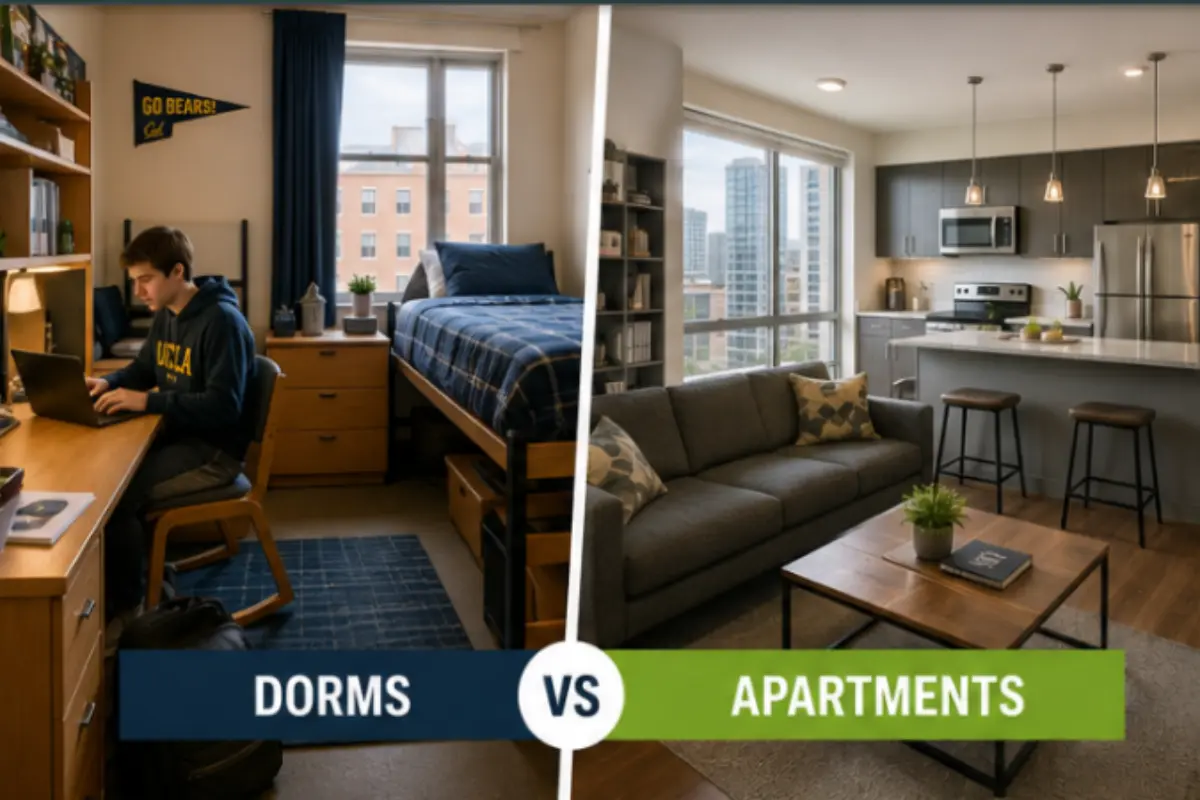
Residence halls, popularly known as student dorms in the USA culture, are housing blocks owned and operated directly by the educational institution. These buildings sit directly on university grounds, placing you seconds away from your lecture halls, laboratories, and campus dining spaces.
This physical proximity makes them incredibly popular among incoming students. The typical layout of a traditional dorm involves a shared room configuration where you live alongside one or more roommates. The university provides essential furniture items, including a standard single bed frame, a study desk, a chair, and a clothing wardrobe.
Bathrooms are usually communal setups shared by multiple rooms along the same corridor. A major feature of dorm life is the mandatory inclusion of campus meal plans. These plans allow you to eat at university dining halls without needing to cook or grocery shop yourself.
This setup provides excellent cost predictability during your first semester when you are still adjusting to a busy lifestyle. Living in a residence hall means navigating strict university community guidelines, quiet hours, and visitor restrictions.
You have to sacrifice a bit of personal privacy along the way. Despite these rules, dorms remain the ultimate social launchpad for new scholars looking to build immediate friendships.
University Apartments
For older scholars who want to stay on campus but desire more autonomy, university-operated apartments are an exceptional choice. These complexes are owned by the institution but feature independent kitchen spaces and private living rooms.
They bridge the gap between traditional dorms and private rentals beautifully. These units are highly sought after by graduate students, married scholars, and final-year undergraduates. You get to enjoy campus security and proximity while gaining the ability to cook your own meals and manage your own daily routine.
This eliminates the need to buy expensive university meal plans. Because these apartments offer a fantastic balance of convenience and independence, availability is almost always severely limited.
Universities usually distribute these units through a competitive lottery system or an early-application model. If you want a spot, you must submit your housing forms the moment the university opens its intake portal.
Student Apartments USA: What Students Should Know
Stepping into the wider commercial market reveals a massive array of specialized student apartments USA developments. These buildings are constructed specifically for young academics, blending independent apartment living with modern communal amenities. They are usually situated just a few blocks away from the main campus gates.
These modern complexes usually feature unique individual leasing models. In a standard apartment contract, all tenants are jointly responsible for the total rent amount. Student-focused buildings often lease out individual bedrooms with private en-suite bathrooms while sharing the kitchen and lounge areas.
- Financial Protection: If your flatmate moves out unexpectedly, your personal lease terms remain completely unaffected.
- Built-in Amenities: These buildings frequently include all-inclusive high-speed internet, secure parcel lockers, on-site gym access, and dedicated group study lounges.
This setup makes them highly popular among international scholars who want a modern environment without traditional roommate liabilities. The community spaces often host social events, giving you plenty of opportunities to network outside your classes. Let’s look closer at the wider private market surrounding American campuses.
Off-Campus Housing USA
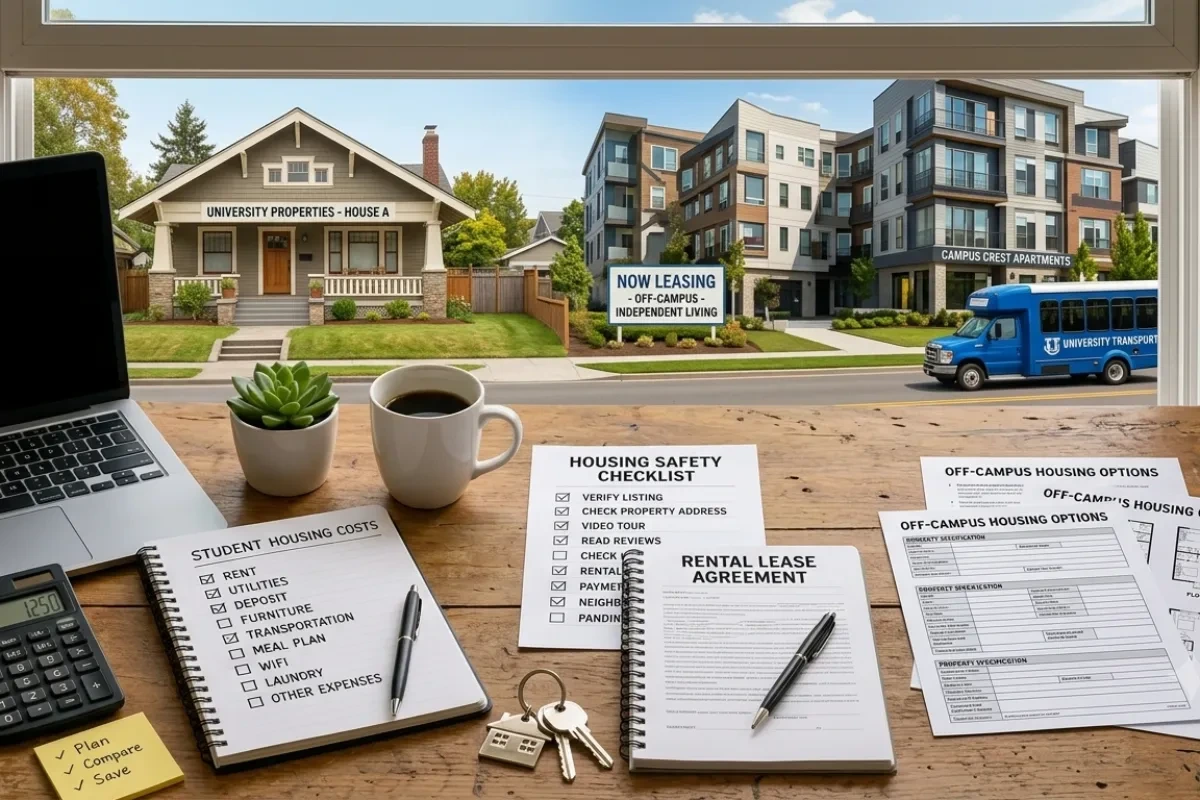
Choosing independent off-campus housing USA options is different from basic student accommodation in USA, because students enter the local rental market and deal with private landlords. This track involves leasing a house or an apartment from private landlords or mainstream property management firms. It offers the highest level of personal freedom, but demands significant administrative responsibility.
When you rent a traditional off-campus flat, you are entirely responsible for managing your monthly utility connections. You will need to contact local providers to set up your electricity, gas, water, and trash disposal accounts. These properties are often listed as completely unfurnished, meaning you must budget for a mattress, desk, and basic kitchen tools.
Daily transit mechanics become a vital factor when living further away from your university buildings. You must map out local bus lines, train stations, or dedicated walking paths to ensure you can reach early seminars reliably. It is an ideal path for mature students who understand the local neighborhood dynamics well.
Shared Student Housing
If your primary objective is to keep your monthly overheads as low as possible, shared residential houses are an excellent choice. This model involves a group of students renting a large suburban family home together. Everyone gets an individual bedroom while splitting the remaining household costs equally.
This structure reduces your individual financial burden significantly. Splitting expensive winter heating bills, high-speed broadband subscriptions, and monthly grocery deliveries across four or five people makes city living highly affordable. It allows budget-focused scholars to live comfortably without working excessive part-time hours.
Sharing a house requires clear communication and a high degree of mutual respect. You must establish strict house rules regarding cleaning rosters, late-night noise levels, and kitchen sharing from day one. Unclear boundaries regarding household chores can quickly create unnecessary personal friction that disrupts your studies.
Private Student Housing USA
Stepping up into premium private student housing USA complexes gives you access to luxury living designed for academic success. These large-scale developments are operated by national student accommodation brands. They focus heavily on providing a seamless, stress-free move-in experience for international students.
Every room in these premium complexes comes fully furnished with modern, high-quality furniture pieces. You do not have to waste time shopping at local furniture warehouses or moving heavy items up stairwells. The property management teams handle everything, ensuring your space is ready the minute your plane lands.
These buildings feature robust security systems, including 24-hour video surveillance, electronic keycard access, and on-site concierge desks. The monthly costs are higher than standard shared houses, but the inclusion of premium gyms and study pods justifies the investment for many families.
Homestay Housing

A homestay involves renting a private bedroom within the active household of a local American family. This model offers an incredible cultural immersion experience that helps newcomers adapt to the local lifestyle rapidly. It provides a warm, supportive environment that minimizes the challenges of homesickness.
Your host family often provides daily home-cooked meals, laundry facilities, and invaluable guidance regarding local transit systems and community customs. It is a fantastic option for younger scholars or those traveling far from home for the very first time. You get to practice your English conversational skills daily in a natural, relaxed setting.
The main tradeoff with a homestay setup is a reduction in your personal independence. You must respect the specific house rules, meal schedules, and lifestyle choices of your host family. Maintaining an open, flexible mindset ensures a harmonious relationship throughout your academic term.
Dorms vs Apartments USA
Deciding between the two most prominent housing tracks becomes much easier when looking at a direct comparison. This matrix highlights how dorms vs apartments USA models stack up across daily lifestyle variables.
Feature | Dorms | Apartments |
Location | Usually directly on campus grounds | On-campus or across surrounding neighborhoods |
Privacy Levels | Lower (Shared spaces and corridors) | Higher (Private rooms and controlled access) |
Furniture Layout | Almost always fully included | Varies from totally empty to fully furnished |
Meal Services | Often tied to mandatory meal plans | Self-regulated cooking and grocery management |
Community Rules | High (University oversight and quiet hours) | More personal freedom and standard civic laws |
Costs | Services and utilities bundled together | Rent rate plus variable utility invoices |
Best Suited For | New incoming international scholars | Independent undergraduates and graduates |
Analyzing these core operational variances reveals that neither path is universally superior. The right track depends entirely on your personal maturity level, budget constraints, and comfort with independent housekeeping duties.
Cost of Student Housing in USA
When evaluating the overall cost of student housing in USA destinations, you must avoid looking for a single magic number. Rental fees are highly volatile and depend completely on regional economic factors, city sizes, and campus locations. Living in a major coastal metropolis will always cost significantly more than studying in a rural midwestern town.
Checking trusted national data frameworks like the College Board reports provides an excellent perspective on average student living expenses. Your total monthly housing invoice is shaped by a complex mix of fixed and variable real estate variables.
Instead of relying on unverified estimates, you should evaluate the key structural factors that drive prices up or down. A premium room in a highly desirable neighborhood will naturally require a much larger budget. Let’s look closely at the primary variables that dictate your monthly housing costs:
- Geographic State and City: Major urban centers like New York City, Los Angeles, and Boston command premium real estate rates. College towns in states like Indiana, Ohio, or Texas offer highly affordable rental landscapes.
- Proximity to University Gates: Properties situated within comfortable walking distance of the main campus libraries always charge a premium. Moving a few miles away and utilizing local bus lines can cut your base rent costs dramatically.
- Room Configuration Style: Sharing a bedroom with a roommate is the easiest way to slash your expenses. Opting for a private studio apartment gives you ultimate privacy but requires a completely independent budget.
- Utility Bundle Structures: Some listings look incredibly cheap because they represent base rent only. You must verify whether high-speed internet, winter heating, electricity, and trash collection services are bundled into your monthly bill.
What Costs Are Often Missed?

The base rent listed on a sleek property website rarely represents the full amount that will leave your bank account. New international students often face severe budget strain because they fail to anticipate secondary operational costs. These small charges add up quickly over a twelve-month academic cycle.
Winter heating and summer air conditioning can cause massive spikes in your monthly electricity bills if your property lacks modern insulation. You must also budget for weekly coin-operated laundry machines if your building lacks an in-unit washer. These small, frequent expenses can quickly disrupt an unmanaged student budget. Let’s examine the primary hidden expenses you need to include in your financial tracker:
- High-Speed Internet and WiFi Setup
- Monthly Electricity and Gas Invoices
- Water Supply and Trash Collection Fees
- On-Campus Parking Permits or Monthly Bus Passes
- Coin-Operated Laundry Cycles
- Essential Bedding, Mattresses, and Kitchen Tools
- Upfront Move-in Fees and Application Processing Charges
- Mandatory Renter’s Insurance Policies
- Lease Renewal or Early Termination Penalties
- Summer Housing Storage Fees
Best Student Housing Option by Need
This targeted breakdown pairs specific student scenarios with the ideal residential model to help narrow down your search.
Student Need | Best Housing Option |
First-year international scholar | On-campus university dorm |
Desires maximum personal privacy | Private studio apartment or flat |
Operating on a tight financial budget | Shared suburban residential housing |
Advanced postgraduate or graduate | University apartment or off-campus flat |
Wants a simple, hassle-free setup | Dorm or branded private student housing |
Requires domestic family style support | Verified local homestay housing |
Demands premium on-site facilities | Private student housing complex |
Does not own a personal vehicle | On-campus rooms or transit-adjacent housing |
To compare more room styles, check our guide on student accommodation types.
Lease and Deposit Basics
A lease is a binding legal contract between you and the property owner. Signing a lease in the United States means you are legally committed to paying the full rent amount for the entire duration specified in the paperwork. The standard lease duration for off-campus properties spans a full twelve-month calendar year.
Before you receive your apartment keys, landlords will require a formal security deposit. This money is held by the management firm to cover any structural damages that might occur during your stay. If you maintain the room perfectly and follow all cleaning guidelines, this deposit is legally refunded to you after move-out.
Most American rental agreements require a U.S.-based co-signer or guarantor who agrees to cover costs if you default on rent. Because new international scholars lack local credit histories or domestic guarantors, landlords may ask for advanced rent payments. Ensure every single financial agreement is explicitly detailed in writing within the main contract document.
Safety Checklist Before Booking

The digital rental market contains numerous risks that target eager students looking for housing from abroad. Falling victim to a rental scam can completely ruin your academic arrival and result in severe financial losses. To protect your family’s savings, check the consumer security guidelines provided by the Federal Trade Commission (FTC) regarding rental scams.
You should never let a landlord rush you into making a hasty cash transfer before verifying the property’s legal status. If a deal looks too good to be true, it is almost certainly a fraudulent listing. Use this functional security checklist before making any financial commitments:
- Verify the Property Address: Cross-reference the exact building address using satellite mapping tools to ensure the house actually exists.
- Demand a Live Video Walkthrough: Never rely on static marketing photographs; insist on a real-time smartphone video tour of the exact room.
- Analyze Independent Reviews: Search online forums and student groups to read honest feedback regarding the property management firm.
- Avoid Unsecure Payment Methods: Never send security deposits via unverified wire transfers, cryptocurrency tokens, or instant gift cards.
- Consult Your University Housing Desk: Ask your institution’s international student office to verify the legitimacy of the landlord.
- Evaluate the Nighttime Commute: Check the placement of local streetlights along the route leading from the nearest transit stop to your front door.
- Maintain Digital Written Records: Save every single email chain, payment receipt, and contract draft in a secure digital folder.
Best Tips for International Students
Your absolute first step when searching for accommodation should always be browsing your university’s official housing web portal. The university housing office maintains updated lists of trusted local landlords and approved off-campus residential buildings. This resource saves you immense time and instantly eliminates unverified commercial listings.
Reach out to the international student association at your campus before traveling. Older students who have lived in the city for several semesters can provide exceptional advice regarding affordable neighborhoods and fair landlords. They can also help you find compatible roommates to share housing costs.
Always ensure you receive a signed copy of your complete lease agreement before boarding your flight to the United States. Confirm your exact move-in date with the building manager to ensure someone is available to hand over your keys upon arrival. Taking these simple precautions ensures a smooth, safe transition into your new academic home.
Final Thoughts
Choosing student housing in USA setups becomes significantly easier when you methodically compare dorms, apartments, total utility costs, lease terms, and your daily routine. The absolute best option is rarely the cheapest room listed on a classifieds board. It is the housing choice that balances your financial constraints, campus transit needs, personal security, and study habits.
Take your time to read every contract clause carefully, verify the safety of your chosen street, and plan your budget to include hidden utility fees. Securing a comfortable, stress-free living space provides the ultimate foundation for your academic journey. This allows you to focus fully on achieving your highest potential at your new American university.
FAQs About Student Housing in USA
What is the best student housing in USA?
On-campus dorms are often the best choice for first-year international students because they simplify your daily transport and help you build immediate social connections. Private apartments or shared houses are better suited for mature students who value independent cooking and personal privacy.
Is student housing in USA expensive?
Yes, student housing in USA setups can be expensive, particularly in major coastal cities like New York, Boston, or San Francisco. Total monthly costs depend heavily on your chosen state, proximity to campus, room sharing arrangements, and whether utilities are included in the base rent.
Are dorms better than apartments in USA?
Dorms are superior for newcomers who require an easy, pre-furnished setup with built-in meal plans right next to their lecture halls. Private apartments are a better fit for independent scholars who prefer to cook their own food, manage their own utilities, and live without strict university curfew rules.
Can international students rent apartments in USA?
Yes, international students can easily rent private apartments across the United States. Because you will lack a domestic U.S. credit history, private landlords may request a larger security deposit, proof of university funding, or a specialized international guarantor service.
What should students check before booking housing in USA?
Students must thoroughly verify the landlord’s reputation, confirm the protection of their security deposit, check for hidden utility surcharges, test the window and door security locks, and analyze the real-world transit path leading to campus before signing a lease agreement.

