



Finding student accommodation in the USA can feel confusing when you are moving from another country. You may see words like dorms, residence halls, on-campus housing, off-campus apartments, roommate housing, homestay, lease, deposit, and guarantor. At first, these terms can feel like too much. However, once you understand the main options, the process becomes much easier.
This guide explains how student housing in USA works for international students. You will learn the main housing types, costs to check, documents you may need, safety tips, lease basics, and the best way to choose between on-campus and off-campus housing.
Quick Answer: What Is Student Accommodation in the USA?
Student accommodation in the USA means housing for students while they study at a college, university, or language school. The main options include on-campus dorms, university apartments, off-campus apartments, shared houses, homestays, and private student housing.
Most first-year international students prefer on-campus housing because it feels easier and safer. However, many students move off campus later because they want more space, privacy, or lower costs.
| Housing Type | Best For | Main Benefit |
|---|---|---|
| On-campus dorms | First-year students | Close to classes and campus life |
| University apartments | Older students | More independence with campus support |
| Off-campus apartments | Independent students | More privacy and freedom |
| Shared housing | Budget students | Lower rent with roommates |
| Homestay | Younger or new students | Family-style support |
| Private student housing | Students wanting facilities | Modern rooms near campus |
Why Housing Choice Matters for International Students
Your housing choice affects your daily life in the USA. It can change your budget, study routine, commute, safety, food plan, and social life. A cheap apartment may look good online. However, it may cost more after transport, utilities, furniture, and internet.
On the other hand, a dorm may look expensive at first. Still, it may include meals, furniture, WiFi, campus security, and easy access to classes. Because of that, international students should compare the full cost. Rent alone does not show the real price. Before choosing, ask yourself these questions:
| Question | Why It Matters |
|---|---|
| Is it close to campus? | Long travel can affect study time |
| Are utilities included? | Separate bills can change monthly cost |
| Is furniture included? | Buying furniture can cost extra |
| Is public transport nearby? | You may not own a car |
| Is the lease clear? | U.S. rental contracts can be strict |
| Is the area safe? | Safety matters more than cheap rent |
For a wider official student process guide, check Study in the States guidance before making housing plans.
Main Types of Student Housing in the USA
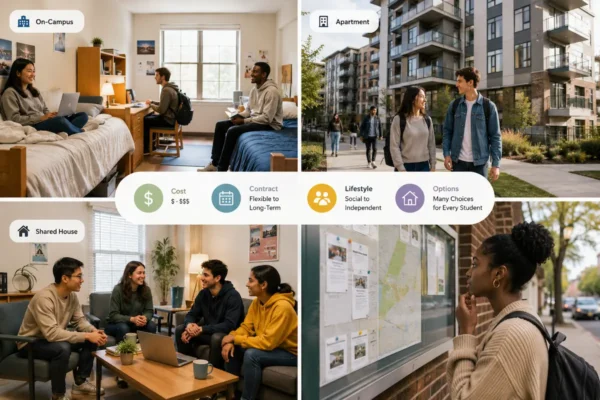
International students usually choose from six main housing options. Some options sit inside the university campus. Others are private rentals near campus or in nearby neighborhoods. Each option has a different cost, contract style, and lifestyle.
1. On-Campus Dorms
On-campus dorms, also called residence halls, are rooms inside university housing buildings. They are often close to classrooms, libraries, dining halls, gyms, and student support offices. Because of this, dorms are popular with first-year students.
Many dorms include a bed, desk, chair, wardrobe, internet access, laundry area, and shared common spaces. Some dorms have shared bathrooms. Others offer private or semi-private bathrooms.
Pros of On-Campus Dorms
On-campus dorms make the first year easier. You live close to classes, so you spend less time commuting. Also, campus support is nearby. If you need help, you can contact housing staff, resident assistants, or the international student office. Dorms can also help you meet people faster. Shared lounges, dining halls, and campus events make social life easier.
Cons of On-Campus Dorms
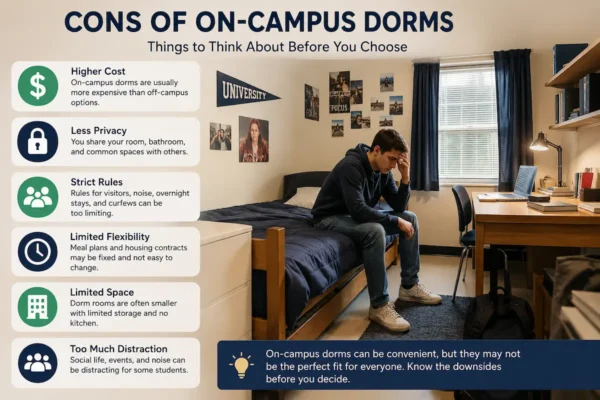
Dorms can feel small. You may share a room with another student, depending on the university and room type. Privacy can also be limited. Shared bathrooms, quiet hours, and visitor rules may not suit everyone. In some cases, on-campus housing costs more than shared off-campus housing. However, the price may include meals, utilities, and furniture.
Best For
On-campus dorms suit:
- First-year international students
- Students who want a simple start
- Students without a car
- Students who want campus support
- Students who want to meet people quickly
2. University Apartments
University apartments are usually managed by the college or university. They may be on campus or close to campus. These apartments often suit older undergraduate students, graduate students, married students, or students who want more independence.
A university apartment may include a private bedroom, shared kitchen, living area, and bathroom. Some units also include family housing options.
Pros of University Apartments
University apartments give more freedom than dorms. You may cook your own food and manage your own schedule. At the same time, you still stay connected to university support. This can help if you are new to U.S. housing rules. Many students like this option because it feels more adult but still safe.
Cons of University Apartments
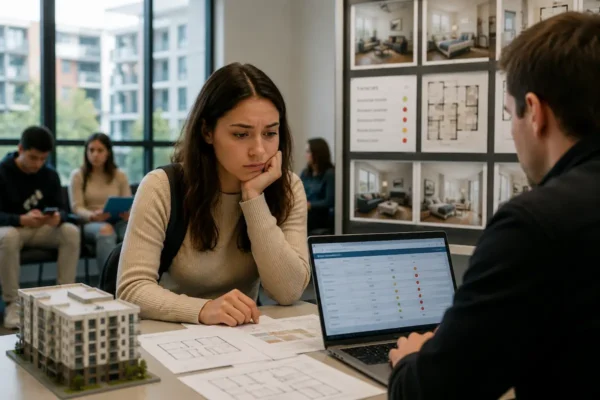
Availability can be limited. Some universities have long waiting lists. Costs may also vary based on location, room size, and campus demand. In addition, you may need to apply early. If you wait too long, the best units may disappear.
Best For
University apartments suit:
- Graduate students
- Older undergraduates
- Students who want more privacy
- Students who want campus support
- Students who prefer cooking at home
3. Off-Campus Apartments
Off-campus apartments are private rentals outside university housing. You rent from a landlord, apartment company, or property manager. This option gives more freedom. However, it also brings more responsibility. You may need to handle rent, utilities, internet, furniture, renter’s insurance, maintenance requests, and lease terms.
Pros of Off-Campus Apartments
Off-campus apartments can offer more space and privacy than dorms. They may also cost less if you share with roommates. In many college towns, students rent apartments near bus routes, grocery stores, and campus areas. Another benefit is independence. You can choose your neighborhood, room size, and roommate setup.
Cons of Off-Campus Apartments
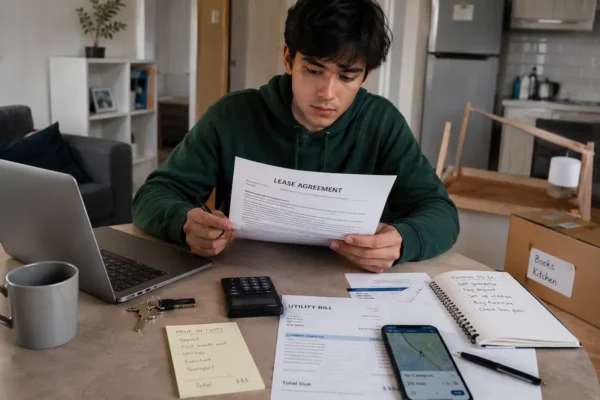
Off-campus housing takes more effort. You must read the lease, check utilities, arrange furniture, and understand payment rules. Some landlords may ask for a credit history, a U.S. guarantor, or larger deposit.
This can be hard for international students. Also, transport matters. A cheaper apartment far from campus may not save money if buses, rideshares, or parking cost too much.
Best For
Off-campus apartments suit:
- Students who know the city
- Students who want independence
- Students with roommates
- Graduate students
- Students who want more space
- Students who can manage bills
4. Shared Housing With Roommates
Shared housing means you rent a room in an apartment or house with other students. This is one of the most common ways to lower rent in the USA. Instead of paying for the full apartment, you split costs with roommates. You may share the kitchen, bathroom, living room, internet, and utilities.
Pros of Shared Housing
Shared housing can reduce monthly costs. It can also help international students make friends. Roommates may help you learn local habits, transport routes, grocery stores, and campus life. Also, shared homes can feel less lonely than living alone.
Cons of Shared Housing

Roommate problems can happen. Noise, cleaning, guests, bills, and food sharing can create stress. Because of that, you should agree on rules before moving in. Talk about quiet hours, cleaning, rent dates, guests, shared supplies, and utility payments.
Best For
Shared housing suits:
- Budget-focused students
- Students who want roommates
- Students who are comfortable sharing
- Students who already know the area
- Students who want lower rent
5. Homestay Accommodation
Homestay means you live with a local host family. Some students choose this option through a school, agency, or approved housing program. A homestay may include a private room, meals, and family-style support. This option is more common for younger students, language school students, and students who want cultural support.
Pros of Homestay
Homestay can help you adjust to American life. You may learn about local food, language, transport, holidays, and daily routines. Some students also feel safer because they live with a family instead of alone. Meals may be included, which can make the first few months easier.
Cons of Homestay

Homestay gives less independence. You may need to follow house rules, meal times, guest rules, or quiet hours. The home may also sit farther from campus. So check travel time before choosing. This option works best when the host family and student expectations match well.
Best For
Homestay suits:
- Younger students
- Language school students
- Students who want family support
- Students who want a cultural experience
- Students are nervous about living alone
6. Private Student Housing
Private student housing means student-focused apartments or buildings owned by private companies. These buildings often sit near large universities. Many offer furnished rooms, roommate matching, study lounges, gyms, laundry rooms, and social spaces. Some private student housing works like off-campus apartments. Other buildings feel more like private dorms.
Pros of Private Student Housing
Private student housing can be easy for students. Many units include furniture, internet, and student-friendly layouts. Some buildings also offer individual leases. That means each student pays for their own room instead of sharing one full apartment lease. This can reduce stress if one roommate leaves or misses rent.
Cons of Private Student Housing
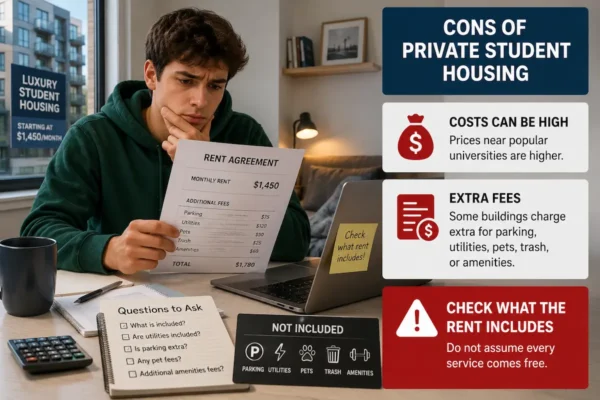
Costs can be high near popular universities. Also, some buildings charge extra fees for parking, utilities, pets, trash, or amenities. Before signing, check what the rent includes. Do not assume every service comes free.
Best For
Private student housing suits:
- Students who want furnished rooms
- Students who want apartment-style living
- Students who want roommate matching
- Students near large universities
- Students who want modern facilities
On-Campus vs Off-Campus Housing in the USA
Many international students compare on-campus housing USA with off-campus housing USA before booking. Both options can work. The better choice depends on your budget, university rules, transport, and comfort level.
| Feature | On-Campus Housing | Off-Campus Housing |
|---|---|---|
| Location | Usually close to classes | Depends on neighborhood |
| Setup | Easier for new students | More responsibility |
| Furniture | Usually included | Sometimes included |
| Utilities | Often included | May be separate |
| Social life | Easier to meet students | Depends on roommates |
| Privacy | Lower to medium | Medium to high |
| Lease style | University housing contract | Private rental lease |
| Best for | First-year students | Independent students |
On-campus housing works well if you want a simple start. Off-campus housing works better if you want freedom, space, or lower shared costs. However, do not compare rent alone. Add utilities, internet, furniture, transport, and food before deciding.
Cost of Student Accommodation in USA
The cost of student accommodation in USA changes by state, city, university, and room type. A room in New York, Boston, Los Angeles, San Francisco, or Washington, D.C. can cost much more than housing in a smaller college town. Because of this, students should check the official university cost of attendance page. It usually shows estimated housing, food, books, transport, and personal expenses.
College Board also shares living expense budget guidance by region and metro area, which can help students compare wider cost patterns. College Board explains the five main college costs, including tuition, room and board, books, personal expenses, and transportation.
Costs You Should Check
Before booking, check:
- Monthly rent
- Meal plan cost
- Utilities
- Internet
- Furniture
- Laundry
- Parking
- Public transport
- Renter’s insurance
- Security deposit
- Application fee
- Move-in fee
- Lease break fee
- Summer housing cost
At first, a dorm may look more expensive. However, it may include furniture, utilities, internet, campus access, and meals. Meanwhile, a cheaper apartment may need furniture, kitchen items, utility setup, and transport. So, always compare the total cost.
Dorms vs Apartments: Which Is Better?
Dorms and apartments offer very different student lifestyles. Dorms give easier access to the campus. They also help new students meet people. Apartments offer more privacy and independence. However, they require more planning.
| Student Need | Better Option |
|---|---|
| Easy first year | Dorms |
| More privacy | Apartment |
| Lower setup work | Dorms |
| Cooking at home | Apartment |
| Strong campus life | Dorms |
| More space | Apartment |
| Better for graduate students | Apartment |
| Less rental paperwork | Dorms |
Choose dorms if you want a simple start. Choose apartments if you can manage bills, leases, transport, and daily tasks.
Lease Basics for International Students
A lease is a legal rental agreement. It explains your rent, dates, rules, fees, and responsibilities. In the USA, a lease can be strict. So read it before signing. If you do not understand a term, ask the landlord, housing office, or international student office.
Common Lease Terms
| Lease Term | Meaning |
|---|---|
| Rent | The amount you pay each month |
| Security deposit | Money held for damage or unpaid rent |
| Lease term | How long does the rental lasts |
| Utilities | Bills such as electricity, gas, water, and internet |
| Guarantor | A person who promises payment if you do not pay |
| Sublease | Renting your place to another person with permission |
| Late fee | Extra charge for late rent |
| Move-in fee | One-time fee before moving in |
| Renter’s insurance | Insurance for your personal items |
International students should pay close attention to guarantor rules. Some landlords ask for a U.S.-based guarantor. If you do not have one, ask whether they accept university support, a larger deposit, or a trusted guarantor service.
Documents You May Need
Housing documents vary by university, landlord, and state. Still, many students may need some of these:
- Passport
- Student visa details
- I-20 or DS-2019
- University admission letter
- Student ID
- Proof of funds
- Bank statement
- Emergency contact
- Guarantor information
- Previous rental reference, if available
- Signed housing application
Do not send sensitive documents to random people online. Instead, use official university portals, trusted apartment websites, or verified property managers.
Safety Tips Before Booking Housing
Safety matters, especially when you are booking from outside the USA. The FTC warns that rental scammers may create fake listings for places that do not exist or are not really for rent. They may also offer very low rent or amazing amenities to rush students into paying. Because of this, slow down before sending money.
Housing Safety Checklist
Before paying, check:
- Is the listing on a trusted website?
- Does the property address exist?
- Does the rent look too cheap?
- Can you see a live video tour?
- Does the landlord use a real company email?
- Is there a written lease?
- Are payment methods safe?
- Can the university housing office confirm the resource?
- Are reviews real and recent?
- Is the area safe at night?
Never send money by gift card, wire transfer, crypto, or strange payment methods. Also, avoid landlords who pressure you to pay before you see a lease or confirm the property.
Best Housing Option for First-Year International Students
First-year international students usually need simple housing, clear rules, and strong support. Because of that, on-campus dorms often work well. They reduce travel stress, help you meet people, and keep you close to student services.
Private student housing can also work if it sits near campus and offers good support. Homestay may suit students who want family-style help, especially during the first months.
Best Housing Option for Graduate Students
Graduate students often prefer more privacy and quiet. Because of that, university apartments, off-campus apartments, studios, and shared apartments can work well. Graduate students may spend more time researching, working, or attending labs.
So a quiet room and shorter commute can matter more than social events. Still, costs can rise quickly. Sharing an apartment with another graduate student can help reduce rent.
Best Housing Option for Budget Students
Budget students should compare shared housing, older apartments, university apartments, and rooms farther from the busiest areas. However, cheap rent can hide extra costs. Before choosing the lowest rent, check utilities, transport, furniture, laundry, and safety.
A room that costs less but needs long rides to campus may waste time and money. Shared housing can work well when roommates are reliable and the lease is clear.
How to Find Student Accommodation in USA
Start with your university housing website. This should be your first step. Most universities have pages for residence halls, university apartments, off-campus housing, roommate resources, and housing deadlines. After that, contact the international student office.
They may share trusted resources, safety tips, and local housing advice. You can also check student groups, apartment platforms, and private student housing providers. However, always verify the listing before paying.
Smart Search Steps
Follow this order:
- Check your university housing page
- Ask the international student office
- Review on-campus options
- Compare off-campus housing resources
- Check commute and public transport
- Read the lease carefully
- Verify the landlord or company
- Avoid rushed payments
- Keep copies of all documents
- Confirm move-in date before travel
This simple process can save time and reduce risk.
What to Ask Before You Book
Before you sign a lease or housing contract, ask clear questions.
| Question | Why It Matters |
|---|---|
| What does rent include? | Avoid surprise bills |
| Is furniture included? | Furniture can cost extra |
| How long is the lease? | Some leases run 12 months |
| Can I leave early? | Plans can change |
| Is there a deposit? | Know refund rules |
| Are utilities included? | Bills can change monthly |
| Is renter’s insurance needed? | Some landlords require it |
| How far is campus? | Commute affects daily life |
| Is public transport nearby? | Many students do not own cars |
| Who handles repairs? | Maintenance speed matters |
Also ask about guests, quiet hours, parking, laundry, package delivery, and roommate matching. Small details can affect daily comfort.
Common Mistakes International Students Make
Many students make housing mistakes because they rush. Some book the first room they see. Others trust nice photos without checking the real property. A few students pay deposits before reading the lease. This can create serious problems later. Avoid these mistakes:
- Booking too late
- Choosing by photos only
- Ignoring utilities
- Forgetting transport cost
- Not checking lease length
- Paying before verifying the landlord
- Ignoring safety reviews
- Not asking about furniture
- Missing housing deadlines
- Signing without asking questions
A good room should match your budget, campus needs, and comfort level.
Final Checklist Before Moving In
Before you travel or move in, confirm every detail. Check:
- Full address
- Move-in date
- Key pickup process
- Rent payment method
- Deposit receipt
- Lease copy
- Room furniture
- Bedding needs
- Kitchen items
- WiFi setup
- Laundry access
- Public transport route
- Emergency contact
- Campus safety number
- Maintenance contact
Also save digital copies of your lease, passport, visa details, admission letter, and housing emails. This can help if you face confusion after arrival.
Final Thoughts
Choosing student accommodation in USA becomes easier when you compare the full picture. Dorms offer a simple start and strong campus access. University apartments give more independence with campus support. Off-campus apartments offer privacy, but they need more planning.
Shared housing can lower costs, while homestay can give new students extra support. Private student housing can also work well if the building is safe, clear, and close to campus. Before you book, compare rent, utilities, furniture, transport, lease terms, safety, and support.
Most importantly, do not rush payments. Verify the property, read the lease, and ask your university for help when needed. Once you understand your housing options, finding student accommodation in USA feels less stressful and much more manageable.
FAQs About Student Accommodation in USA
What is the best student accommodation in USA for international students?
On-campus dorms are often the best first option for new international students because they offer campus access, support, and a simple setup. However, off-campus apartments, university apartments, and private student housing can work well for students who want more independence.
Is on-campus housing cheaper than off-campus housing in USA?
Not always. On-campus housing may look more expensive, but it can include furniture, internet, utilities, and meal plans. Off-campus housing may have lower rent, but students often pay extra for utilities, furniture, transport, and food.
Can international students rent apartments in the USA?
Yes, international students can rent apartments in the USA. However, some landlords may ask for a credit history, proof of funds, deposit, or U.S.-based guarantor. Students should ask the landlord about requirements before applying.
What documents do international students need for housing in USA?
Students may need a passport, visa details, I-20 or DS-2019, admission letter, student ID, proof of funds, bank statement, and emergency contact. Requirements can change by landlord, state, and university.
How can students avoid housing scams in the USA?
Students should verify the property, check the landlord or company, request a live video tour, read the lease, and avoid unusual payment methods. Also, they should never rush into a payment because a listing looks cheap or “too good to miss.

