



Finding student accommodation in London can feel overwhelming, especially for students who are new to the city. London is one of the most popular study destinations in the world, home to universities such as University College London, King’s College London, Imperial College London, and the London School of Economics. Because thousands of students arrive every year, demand for housing is very high. This often means higher rent, limited availability, and strong competition for rooms in popular student areas.
Facebook Links
DIT CIT course in multanLondon housing is also different from that of other UK cities. Rent prices vary widely depending on location, transport access, and the type of accommodation you choose. A room in central London may cost significantly more than one in outer zones, while private student residences often include modern facilities but come at a higher price. Students also need to consider commute time, safety, and whether bills are included in rent.
This is why choosing accommodation carefully is important. The wrong choice can lead to long daily travel, unexpected costs, or living in an area that does not suit your lifestyle. The right choice can make your student life easier, helping you stay close to campus, manage your budget, and enjoy the city.
This guide will help you understand how student accommodation works in London and how to make a smart decision. You will learn about different housing types, average rent prices, the best and most affordable student areas, and how to book accommodation safely. By the end, you will have a clear idea of how to find housing that fits both your budget and your lifestyle while studying in London.
What Student Accommodation in London Means
Student accommodation in London refers to housing designed or commonly used by university students while studying in the city. Because London has one of the largest student populations in Europe, the housing market includes several types of accommodation that suit different budgets, lifestyles, and study needs. Understanding how student housing works in London helps you choose the right option before signing a contract.
Types of Housing Available for Students in London
Students in London can choose from several accommodation types. Each option offers different levels of cost, privacy, and convenience.
Common options include:
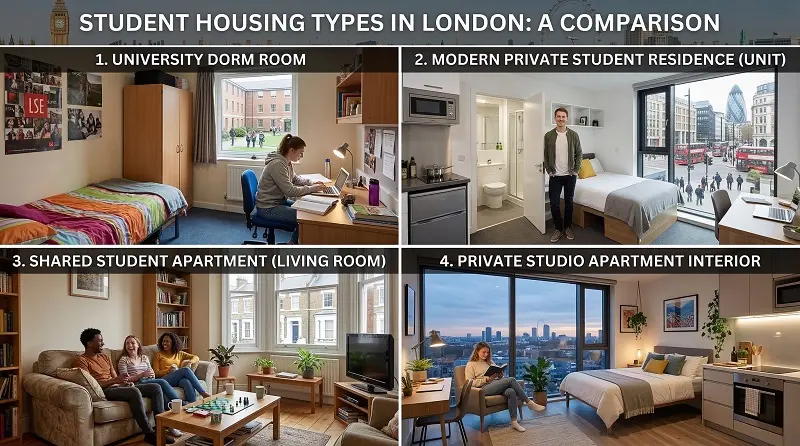
University halls of residence
These are buildings managed by universities such as University College London, King’s College London, or Imperial College London. They are usually located close to campus and are often the first choice for first-year students.
Purpose-built student accommodation (PBSA)
These are private student residences designed specifically for students. Companies like Unite Students, iQ Student Accommodation, and Student Roost operate many of these buildings across London. They often include furnished rooms, security, study spaces, and shared facilities.
Shared student houses or flats
Many second-year and third-year students rent private houses together. This option is usually cheaper than private student residences and offers more independence.
Studio apartments
Studio accommodation provides a private room, kitchen, and bathroom. These are more expensive but offer privacy and a quiet space for studying.
Difference Between Student Housing and Normal Renting
Student accommodation works differently from standard private renting in London. Regular rentals often require long leases, separate utility payments, and unfurnished spaces. Student housing is designed to simplify living for people who are studying.
Typical differences include:
- Contracts aligned with academic terms
- Furnished rooms with beds, desks, and storage
- Shared services such as pantries and study areas
- Bills are often included in rent
- Buildings located near universities or transport links
These features make it easier for students to focus on their studies without managing the complexities of traditional renting.
Why London Housing Works Differently Than Other UK Cities
London’s housing market is more competitive and expensive than most other UK cities. High demand, limited space, and the presence of many universities all affect accommodation availability and pricing.
Students often need to plan carefully because:
- Rent prices are higher than in cities like Leeds, Sheffield, or Liverpool
- Accommodation near central universities fills quickly
- Commuting from outer areas is common due to high central rents
- Transport access, especially the London Underground, plays a major role in housing decisions
Because of these factors, choosing accommodation in London involves balancing cost, location, and travel time. Understanding these differences helps students find housing that supports both their budget and their academic routine.
Types of Student Accommodation in London
Students in London can choose from several housing options. Each type offers different levels of cost, privacy, convenience, and social life. Understanding these options helps you decide which type of accommodation fits your lifestyle, budget, and stage of study.
University Halls of Residence
University halls are buildings owned or managed by universities. Many London universities, such as University College London, King’s College London, and Imperial College London, provide halls for their students.
These housings are usually located close to the site or in areas with strong carriage connections. Rooms are typically furnished, and students share kitchens and common areas with others in the building.
University halls are often the first choice for first-year students because they make it easier to settle into university life and meet new people.
Pros
- Located near campus or university facilities
- An easy way to meet other students
- Rent often includes utilities and internet
- University support and maintenance services
Cons
- Limited privacy due to shared spaces
- Fixed contract periods
- Fewer room choices compared to private housing
For many new students, halls offer a simple and social start to university life in London.
Private Student Accommodation (PBSA)
Purpose-built student accommodation, often called PBSA, refers to housing built specifically for students by private companies. These buildings are designed to provide modern facilities and comfortable living spaces.
Some well-known providers in London include:
- Unite Students
- IQ Student Accommodation
- Student Roost
PBSA buildings often include features such as:
- Fully furnished rooms
- High-speed internet
- Study rooms and communal lounges
- On-site security and maintenance
- Gyms or social spaces in some buildings
Rent in private student accommodation is usually all-inclusive, meaning utilities, internet, and building services are included in one weekly payment.
Typical prices vary depending on location and room type. In London, rooms in private student residences often range from £180 to £350 per week, while studio apartments in premium buildings may cost even more.
This option suits students who want convenience, modern facilities, and predictable monthly costs.
Shared Student Houses
Many undergraduates move into public houses after their initial year. In this setup, a group of students rents a private house or flat together.
Shared housing is common in London areas with large student populations, and it is often more affordable than private student residences.
Students typically split rent and other expenses, such as:
- Electricity and heating
- Water bills
- Internet service
Living with housemates also means sharing responsibilities like cleaning, paying bills on time, and maintaining common spaces.
Benefits of shared student housing include:
- Lower rent compared to private residences
- More independence than university halls
- Larger living spaces in some properties
However, it also requires good communication between housemates to manage responsibilities smoothly.
Studio Apartments
Studio apartments provide a private living space with a bedroom, kitchen, and bathroom all in one unit. This type of accommodation offers complete independence and privacy.
Many studios are located within private student accommodation buildings, while others are available through private landlords.
Studios are usually the most expensive student housing option in London, with prices often ranging from £250 to £400 or more per week, depending on the area and building facilities.
This type of accommodation is popular with:
- Postgraduate students
- Mature students
- Students who prefer quiet study environments
The main advantage is privacy and personal space, but the higher cost means it may not suit students with limited budgets.
Each accommodation type offers different benefits. Some students prioritise social life and convenience, while others focus on affordability or privacy. Understanding these differences helps you choose housing that supports both your academic goals and your daily comfort while studying in London.
Average Cost of Student Accommodation in London
London is one of the most classy capitals in the UK for learners. Rent prices are higher than in most other university cities because of strong demand, limited housing space, and the large number of universities located in the capital. Thousands of domestic and international students look for accommodation every year, which increases competition for rooms in popular areas.
The weekly rent you pay depends mainly on the type of accommodation, the location, and whether bills are included in the price.
Here are typical weekly rent ranges students can expect in London.
Shared student housing
Shared houses or flats are usually the most affordable option. Students rent a property together and split the cost.
Typical price range:
£180 – £250 per week
However, utilities such as electricity, heating, and internet may need to be paid separately.
Private student accommodation (PBSA)
Purpose-built student residences offer furnished rooms, security, and shared facilities. Rent usually includes utilities and internet.
Typical price range:
£230 – £350 per week
Buildings located close to central universities or transport hubs may charge even higher prices.
Studio apartments
Studio accommodation offers a private room with its own kitchen and bathroom. These are the most expensive student housing options in London.
Typical price range:
£300 – £450+ per week
Many postgraduate students choose studios because they provide privacy and quiet study space.

Why Student Accommodation in London Is Expensive
Several factors influence housing costs in London.
- High demand from both local and international students
- Limited housing space in central areas
- Proximity to top universities such as UCL, LSE, and Imperial College
- Strong transport connections like the London Underground
- Modern facilities offered by private student residences
Because of these factors, many students choose to live slightly outside the city centre and commute to campus using public transport.
Average Rent by London Zone
London is divided into transport zones, and rent prices often follow this structure. The closer you live to central London, the higher the rent tends to be.
Zone 1 – Highest Cost
Zone 1 includes central London areas such as Bloomsbury, Holborn, and Covent Garden. Many universities and cultural landmarks are located here.
Typical rent range:
£280 – £450+ per week
Living in Zone 1 offers short commute times but comes with significantly higher housing costs.
Zone 2 – Moderate Cost
Zone 2 surrounds central London and includes student-friendly areas such as Camden, Hammersmith, and Stratford.
Typical rent range:
£200 – £320 per week
Many students prefer Zone 2 because it offers a balance between reasonable rent and easy transport access to universities.
Zone 3 – More Affordable
Zone 3 areas, such as Lewisham, Wembley, and New Cross, are further from the city centre but still connected by public transport.
Typical rent range:
£170 – £260 per week
Students living in Zone 3 often trade a longer commute for lower rent and more spacious housing options.
Understanding how prices vary across accommodation types and London zones helps students plan their housing budget more effectively before moving to the city.
Cheapest Areas for Student Accommodation in London
London is known for high living costs, but many neighbourhoods offer more affordable housing for students. These areas are usually located outside the most expensive central districts while still providing strong transport connections to major universities. Students often choose these neighbourhoods to balance lower rent with reasonable commuting times.
Below are some of the most budget-friendly areas for student accommodation in London.
Stratford
Stratford is one of the most popular affordable areas for students in East London. The area has excellent transport connections through the Central Line, Jubilee Line, Overground, and the Elizabeth Line, making it easy to travel across the city.
Students often choose Stratford because:
- Rent is lower than in central London areas
- Fast transport links connect to universities across the city
- The area has large shopping centres, restaurants, and entertaining options
- Modern student residences are available nearby
Because of its transport access and relatively lower rent, Stratford attracts many students studying in central London universities.
Lewisham
Lewisham is another affordable option located in South East London. It has become increasingly popular among students because it offers lower housing costs compared to many central districts.
Students prefer Lewisham for several reasons:
- Relatively affordable shared housing
- Good rail and DLR connections to central London
- Quieter residential environment
- Access to parks and local amenities
The commute from Lewisham to central universities usually takes around 20–30 minutes, making it a practical choice for students.
Wembley
Wembley, located in North West London, has grown into a strong residential area with modern housing developments. The Metropolitan and Jubilee Underground lines connect Wembley to central London.
Reasons students choose Wembley include:
- Lower rent compared to central zones
- Newly developed apartment buildings
- Good transport links to universities
- Access to shops, supermarkets, and entertainment venues
Wembley offers a good balance between affordability and convenience.
Peckham
Peckham has become increasingly popular among students and young professionals in recent years. Found in South East London, the area is known for its original culture and lively community.
Students often move to Peckham because:
- Shared houses are more affordable
- Vibrant social and cultural scene
- Good bus and rail connections to central London
- Strong student and young professional population
Peckham can be a good option for students looking for a lively neighbourhood with relatively lower rent.
New Cross
New Cross is a well-known student area because it is close to Goldsmiths, University of London. The neighbourhood has a strong student presence and many shared housing options.
Students choose New Cross for several reasons:
- Affordable shared houses and flats
- Strong student community
- Quick rail connections to central London
- Easy admission to nearby zones like Deptford and Greenwich
Because of its university presence and lower rent levels, New Cross remains one of the most student-friendly areas in London.
Choosing one of these neighbourhoods can help students manage housing costs while still enjoying access to universities, public transport, and essential services. Many students prefer living slightly outside central London to reduce rent while maintaining a reasonable commute to campus.
Best Areas in London for Students
London offers many neighbourhoods that work well for student life. The best areas usually combine easy access to universities, strong public transport links, and a lively community where students feel comfortable living and studying. Some areas may cost more than others, but they provide convenience, safety, and a social environment that many students value.
Below are some of the most popular areas where students choose to live in London.
Camden
Camden is one of the most vibrant student areas in North London. It is known for its lively atmosphere, street markets, music venues, and restaurants. Many students studying at University College London (UCL) and nearby universities choose Camden because it offers both entertainment and convenient transport.
Transport access is excellent through the Northern Line, which connects Camden to central London and major university areas within minutes. The neighbourhood also has a strong student presence, making it easy to meet other students and find shared housing.
Bloomsbury
Bloomsbury is located in central London and is one of the most academic neighbourhoods in the city. It is home to several institutions, including University College London, SOAS University of London, and Birkbeck, University of London.
Students often prefer Bloomsbury because it allows them to walk to campus instead of relying on transport. The area also has libraries, bookstores, parks, and cafés that create a strong study-focused environment.
While rent can be higher here than in outer areas, many students value the convenience and proximity to their university.
Greenwich
Greenwich is located in South East London and offers a quieter lifestyle compared to central districts. The area is well known for its historic buildings, riverside views, and green spaces such as Greenwich Park.
Students studying at the University of Greenwich or nearby institutions often choose this area. Transport options include the Docklands Light Railway (DLR) and rail services, which provide quick connections to central London.
Greenwich attracts students who want a balance between city access and a calmer residential environment.
Shoreditch
Shoreditch is a lively area in East London that has become popular with young professionals and students. The neighbourhood is known for its creative culture, street art, cafés, and nightlife.
Students who enjoy a vibrant social environment often consider Shoreditch. The area is well connected through the London Overground, several bus routes, and nearby Underground stations.
Shoreditch also offers easy travel to universities in central London, making it a convenient choice for students who want to live in an energetic part of the city.
Hammersmith
Hammersmith is located in West London and is considered one of the most convenient residential areas for students. The neighbourhood offers a good mix of housing options, green spaces, and transport links.
Students benefit from strong Underground connections, including the Piccadilly Line, District Line, and Hammersmith & City Line, which provide direct access to many university locations across London.
Hammersmith also has a large student community and plenty of supermarkets, cafés, and parks. Because of its balance between convenience and livability, many students consider it a practical place to live while studying in London.
Choosing the right neighbourhood in London depends on your priorities. Some students prefer areas close to campus, while others focus on affordable rent or a lively social scene. By considering transport access, community atmosphere, and daily convenience, you can find a location that fits your lifestyle during your studies in London.

Student Accommodation Near Major London Universities
London is home to many world-class universities, and where you live can affect your daily routine, commute time, and overall student experience. Choosing accommodation near your university can save time on travel and help you stay connected with campus activities.
Many students look for housing in neighbourhoods that are either within walking distance of campus or well connected through the London Underground, buses, and rail services. Below are some of the best areas to consider based on the location of major London universities.
Near University College London (UCL)
University College London is situated in Bloomsbury, one of the most historic regions in the city. Because of this central location, several nearby neighbourhoods are popular with UCL students.
Bloomsbury
Bloomsbury is the closest area to UCL. Many students choose accommodation here because it allows them to walk to lectures and university facilities. The area also has libraries, cafés, and quiet parks that support a study-friendly environment.
Camden
Camden is a lively neighbourhood located just north of Bloomsbury. It is known for its vibrant culture, music venues, and markets. Camden also offers strong transport connections through the Northern Line, making it easy for students to travel across London.
Euston
Euston sits between Bloomsbury and Camden and is another convenient location for UCL students. The area has excellent transport links through Euston Station, which connects several Underground and rail lines. Living in Euston allows students to stay close to campus while having access to major transport routes.
Near King’s College London
King’s College London has several campuses across central London, including locations near the River Thames, Waterloo, and the Strand. Students often look for housing in nearby districts with good transport connections.
Waterloo
Waterloo is one of the most convenient places to live for students studying at King’s College London. The area has excellent transport access through Waterloo Station, which connects Underground, rail, and bus routes. Students also benefit from nearby attractions, restaurants, and cultural spaces.
London Bridge
London Bridge is another popular area because it offers quick access to central campuses and strong transport connections. The neighbourhood includes markets, cafés, and riverside walkways, making it a lively place to live while studying.
Elephant and Castle
Elephant and Castle has become increasingly popular with students due to its relatively lower rent compared with nearby central areas. It also offers strong Underground connections that allow students to travel easily to university campuses.
Near Imperial College London
Imperial College London is located in South Kensington, a central district known for museums, cultural institutions, and academic buildings. Students studying at Imperial often search for accommodation in nearby West London areas.
South Kensington
Living in South Kensington allows students to stay close to campus and enjoy one of London’s most prestigious neighbourhoods. However, rent here is usually higher because of the central location and demand.
Hammersmith
Hammersmith is a popular option for Imperial students who want slightly lower rent while still staying connected to campus. The area has excellent Underground connections, including the Piccadilly, District, and Hammersmith & City lines, making commuting quick and convenient.
Fulham
Fulham offers a quieter residential atmosphere compared with central areas. Many students choose Fulham because it provides comfortable housing options and easy access to South Kensington through public transport.
Near the London School of Economics (LSE)
The London School of Finance is located in central London near Holborn and the Strand, hiring students close to many famous and academic areas.
Holborn
Holborn is one of the closest neighbourhoods to the LSE and offers excellent convenience for students who want to live near campus. It also has strong transport connections through Underground stations and bus routes.
Covent Garden
Covent Garden is known for its lively sky, theatres, restaurants, and shopping areas. Although it can be more expensive, students who live here benefit from being within walking distance of several universities and cultural attractions.
Clerkenwell
Clerkenwell is located slightly north of Holborn and offers a quieter residential environment. Many students choose this area because it provides easier access to central London while offering a more relaxed neighbourhood feel.
Living near your university can significantly improve your daily routine. Shorter commute times allow more time for studying, social activities, and exploring London. When choosing accommodation, students should balance location, transport access, and rent costs to find the best place to live during their studies.
Student Halls vs Private Housing in London
One of the biggest decisions students face in London is whether to live in university halls or choose private housing. Both options are common, but they offer different experiences in terms of cost, privacy, social life, and flexibility. The right choice depends on your priorities, budget, and stage of study.
University halls are often arranged by the university and are designed mainly for first-year students. Private housing includes purpose-built student accommodation (PBSA), shared houses, or studio apartments rented through private providers or landlords.
The table below highlights the key differences.
| Feature | University Halls | Private Student Housing |
| Average Cost | £180 – £300 per week | £200 – £400+ depending on type |
| Privacy | Moderate (shared kitchens and common spaces) | Higher privacy, especially with studios |
| Social Life | Very strong community with many students | Depends on housing type and roommates |
| Flexibility | Fixed contracts tied to academic terms | More options including shared houses or studios |
When University Halls Are a Good Choice
University halls are usually the easiest option for new students arriving in London for the first time. Because they are managed by the university, the booking process is simple, and the accommodation is often close to campus.
Halls are especially suitable for:
- First-year students who want to meet new people
- International students who prefer a simple housing process
- Students who want utilities and services included in one payment
- Those who want to live near campus and avoid long commutes
Living in halls also helps students build friendships early in their university experience.
When Private Student Housing Is the Better Option
Private housing offers more independence and flexibility. Students who want more control over their living environment often choose this option after their first year.
Private accommodation is usually better for:
- Second-year or third-year students
- Students who want to live with friends
- Those who prefer quieter environments for studying
- Students looking for more privacy or larger living spaces
Shared houses can reduce costs, while private student residences offer modern facilities such as gyms, study rooms, and social spaces.
Choosing the Right Option
There is no single housing option that works for every student. University halls provide a social and supportive environment, while private housing offers greater independence and flexibility.
Many students begin their first year in halls and later move into shared houses or private residences once they become familiar with the city and their classmates. By considering your budget, lifestyle, and study needs, you can choose the housing option that best supports your time in London.
Cost of Living in London for Students
London offers incredible opportunities for students, but it is also one of the most expensive cities in the UK. Understanding the full cost of living helps students plan their finances and avoid unexpected expenses during the academic year.
| Category | Average Monthly Cost (£) | Percentage of Budget |
|---|---|---|
| Rent / Accommodation | £850 | 60% |
| Food & Groceries | £180 | 13% |
| Transport | £120 | 9% |
| Entertainment & Social Life | £150 | 11% |
| Utilities / Internet / Miscellaneous | £100 | 7% |
| Total Estimated Monthly Budget | £1400 | 100% |
Accommodation is usually the largest expense, but students must also budget for food, transport, and personal spending. Costs can vary depending on lifestyle, accommodation type, and the area of London where you live.
Below is a realistic monthly estimate of common student expenses.
| Expense Category | Estimated Monthly Cost |
| Rent | £750 – £1,100 |
| Food & Groceries | £150 – £220 |
| Transport | £80 – £120 |
| Entertainment & Social Activities | £100 – £180 |
| Miscellaneous (laundry, supplies, phone) | £50 – £100 |
| Estimated Monthly Total | £1,130 – £1,720 |
Rent
Rent is the highest cost for most students. Prices depend on location and accommodation type.
• shared student housing: usually the most affordable option
• private student accommodation: higher cost but includes utilities
• studio apartments: the highest price due to privacy and facilities
Students living outside central London often pay less rent but may spend more on transport.
Food and Groceries
Students who cook their own meals usually spend between £150 and £220 per month on groceries. Shopping at supermarkets and preparing meals at home helps reduce expenses compared to eating out frequently.
Transport
Public transport is an important part of student life in London. Most students use the London Underground, buses, or trains to travel to university.
Student travel cards and Oyster discounts can help reduce costs. Depending on distance, students typically spend £80 to £120 per month on transport.
Entertainment and Social Activities
London offers many entertainment options, including museums, events, cafés, and nightlife. Students usually set aside £100 to £180 per month for social activities and leisure.
Many cultural attractions in London offer student discounts or free entry, which can help manage costs.
Planning a Realistic Student Budget
While London can be expensive, careful budgeting makes it manageable. Students often reduce expenses by sharing housing, cooking at home, and using student discounts for travel and entertainment.
Understanding the full cost of living before moving to London helps students choose accommodation that fits their budget and allows them to enjoy their university experience without unnecessary financial pressure.
How to Choose the Right London Neighbourhood
Choosing the right neighbourhood in London is just as important as choosing the accommodation itself. London is a large city with many different areas, and each neighbourhood offers a different balance of cost, convenience, and lifestyle. Students should consider several factors before deciding where to live.
Distance to University
Living close to your university can make daily life easier. Shorter travel times mean you can attend lectures, study sessions, and campus activities without spending too much time commuting.
Some students prefer to live within walking distance of campus, especially in central areas like Bloomsbury or Holborn. Others choose neighbourhoods slightly further away to reduce rent while still maintaining a manageable commute.
Transport Access
London has an extensive public transport system that includes the London Underground, buses, trains, and the Docklands Light Railway (DLR). When choosing accommodation, students should check how easily they can travel to campus.
Look for areas that have:
- Nearby Underground stations
- Direct bus routes to the university
- Reliable night transport options
Living near major transport lines can make commuting faster and more convenient.
Safety
Safety is an important factor when selecting a place to live. Students should research neighbourhoods before signing a rental agreement.
Helpful steps include:
- Checking local crime statistics
- Reading online reviews about the area
- Asking current students about their experiences
Many university areas have well-known student neighbourhoods that are considered safer and more comfortable for students.
Student Community
Living in an area with a strong student presence can make it easier to meet people and adapt to university life. Areas close to universities often have shared housing, student-friendly cafés, and study spaces.
A strong student community can also make it easier to find roommates and access local services designed for students.
Local Amenities
Students should also consider everyday convenience when choosing a neighbourhood. Access to supermarkets, pharmacies, libraries, and cafés can make daily life easier.
Good student areas often include:
- Grocery stores and markets
- Affordable restaurants and cafés
- Parks and study-friendly spaces
- Gyms and leisure facilities
Choosing a neighbourhood with the right balance of affordability, convenience, and transport access can greatly improve your experience while studying in London.

When Should You Book Student Accommodation in London
Booking accommodation at the right time is very important in London. Because the city has a large student population, many popular housing options fill up quickly.
Planning early increases your chances of securing a good location and a reasonable price.
January to March – Best Time to Book
This is usually the best period to search for accommodation. Many private student residences open bookings early in the year, giving students access to the widest range of options.
During this period:
- The best locations are still available
- Early booking offers may be available
- You can compare several housing options before deciding
Students who start their search during this period often secure better rooms.
April to June – Moderate Availability
Many students confirm their university offers during the spring, so demand begins to increase during this time.
Although many accommodation options are still available, some of the most popular buildings and locations may start filling up.
Students booking during this period should compare options quickly to avoid losing preferred rooms.
Summer – Limited Choices
By summer, many student housing options in central London are already booked. Students who wait until this period may find fewer choices and higher prices.
While accommodation can still be found through cancellations or private rentals, waiting too long increases the risk of limited availability.
Why Booking Early Matters
London has one of the most competitive student housing markets in the UK. Starting the search early allows students to compare prices, secure better locations, and avoid last-minute stress.
Planning also helps students manage their budgets and arrange documents before moving to the city.
Step by Step: How to Book Student Accommodation in London
Booking accommodation becomes much easier when students follow a clear process. Taking each step carefully helps avoid mistakes and ensures you choose the right place to live.
Step 1: Choose Your University Location
Start by identifying where your university campus is located. London universities may have multiple campuses, so it is important to understand which area you will be studying in.
This helps you select accommodation within a convenient commuting distance.
Step 2: Select the Housing Type
Decide which accommodation type suits your needs and budget.
Common options include:
- University halls of residence
- Private student accommodation
- Shared student houses
- Studio apartments
Each option offers different levels of privacy, cost, and convenience.
Step 3: Compare Prices and Areas
Research several neighbourhoods and accommodation providers. Look at factors such as rent prices, transport access, safety, and distance from campus.
Comparing multiple options helps ensure you find housing that fits both your budget and lifestyle.
Step 4: Prepare Required Documents
Accommodation providers may request certain documents during the booking process. These often include:
- Proof of student status or university offer
- Identification documents
- Guarantor details (in some cases)
Preparing these documents early helps avoid delays.
Step 5: Pay the Deposit
Once you choose accommodation, you will usually need to pay a deposit to secure your room. Deposits are typically equivalent to several weeks of rent.
Always confirm that the deposit is protected under the UK tenancy deposit protection scheme.
Step 6: Confirm Move-In Details
After completing the booking, confirm your move-in date and instructions with the accommodation provider. Check what items are included in the room and review the inventory list.
Following these steps helps ensure a smooth booking process and allows students to start their studies in London with confidence.
Safety Tips for Student Housing in London
London is generally a safe city, but students should still take precautions when searching for accommodation. Being careful during the booking process can help you avoid scams, financial problems, and unsafe living situations.
Check Landlord or Provider Credibility
Before committing to a property, make sure the landlord or accommodation provider is legitimate.
Helpful steps include:
- Searching for the company or landlord online
- Checking official accommodation websites
- Reading student reviews on trusted platforms
- Confirming contact details and property addresses
Large student housing providers and verified rental platforms are usually safer options for first-time renters.
Avoid Common Housing Scams
Housing scams can occur in busy rental markets like London. Fraudulent listings may advertise attractive prices or ask for payments before showing the property.
To stay safe:
- Never send money before confirming the property exists
- Avoid landlords who refuse to provide proper documentation
- Be cautious if rent prices seem unusually low for the area
- Use secure payment methods rather than cash transfers
If something feels suspicious, it is better to look for another option.
Verify Contracts Carefully
Before signing any agreement, read the tenancy contract in detail. The contract should clearly explain rent payments, deposit terms, contract length, and responsibilities for maintenance or utilities.
Students should check:
- The total rent amount and payment schedule
- Whether utilities are included in the rent
- Deposit protection information
- Cancellation or early termination rules
Understanding the contract helps prevent future disputes.
Research Neighbourhoods Before Moving
Living in a suitable neighbourhood can improve your overall experience while studying in London.
Students should research areas by:
- Checking crime statistics and safety reports
- Reading reviews from other residents or students
- Visiting the area, if possible, before signing the contract
Choosing a safe, student-friendly neighbourhood can make daily life more comfortable and secure.
Common Mistakes Students Make When Renting in London
Many students make avoidable mistakes when searching for accommodation in London. Understanding these common issues can help you make better decisions.
Booking Too Late
London housing fills quickly, especially near universities. Students who wait until summer often face limited options or higher prices.
Starting the search early in the year gives you more choices and better prices.
Ignoring Commute Time
A cheaper apartment may seem attractive, but long commuting times can quickly become frustrating. Spending over an hour travelling to university every day can reduce study time and increase transport costs.
Always check the distance and travel time to campus before choosing a location.
Not Checking What Bills Are Included
Some accommodations include utilities such as electricity, heating, and internet, while others require tenants to pay these separately.
Failing to check this detail can increase your monthly expenses.
Choosing Unsafe Areas
Low rent can sometimes indicate a less desirable location. Students should prioritise safety and accessibility rather than focusing only on price.
Researching neighbourhoods and reading reviews helps avoid this problem.
Signing Contracts Too Quickly
Some students rush to secure accommodation without fully understanding the terms of the agreement.
Before signing, take time to review the contract carefully and ask questions about anything that seems unclear.
Avoiding these mistakes can help students secure housing that supports both their safety and academic success.
Frequently Asked Questions
How much is student accommodation in London?
Student accommodation in London typically costs between £180 and £350 per week, depending on the type of housing and location. Shared houses tend to be cheaper, while studio apartments and private student residences are more expensive.
Where do most students live in London?
Many students live in areas close to their universities or in neighbourhoods with good transport connections. Popular student areas include Camden, Bloomsbury, Stratford, Greenwich, and Hammersmith.
Is London expensive for students?
London is one of the most luxurious cities in the UK. However, careful budgeting, shared housing, and student discounts can help reduce living costs.
What is the cheapest area in London for students?
Affordable student areas often include Stratford, Lewisham, Peckham, New Cross, and Wembley. These neighbourhoods offer lower rent compared with central London while still providing good transport access.
When should I book accommodation in London?
The best time to book student accommodation is between January and March, when many options are still available. Waiting until summer may limit choices and increase prices.
Final Advice: Choosing the Right Student Housing in London
Choosing student accommodation in London requires careful planning. The city offers many housing options, but rent prices and availability can vary significantly depending on location and housing type.
Students should start by considering their budget and lifestyle preferences. Some students prioritise living close to campus, while others prefer more affordable areas with good transport connections. Understanding your priorities helps narrow down the best housing options.
Planning early also makes a major difference. Beginning your search months before the academic year increases the chances of finding a suitable property in a good location.
Finally, research neighbourhoods carefully before making a decision. Consider safety, transportation access, and local amenities to ensure the area supports your daily routine.
By comparing housing options, carefully reviewing contracts, and planning, students can find accommodation that supports both their studies and their overall experience in London.

