



Finding a place to live is the first real problem most students face after admission. Many move to another city for university. Parents worry about safety. Students worry about cost, food, and study environment.
Pakistan does not have a single housing system like some other countries. Every city works a bit differently. Some universities offer rooms. Many students stay in private girls hostels. Others share flats with friends.
This guide explains how student accommodation in Pakistan actually works. You will learn typical rent, living expenses, safe cities, and how students choose a place.
Facebook Links
DIT CIT course in multanHow Student Accommodation Works in Pakistan
Student housing in Pakistan is mostly run by private owners instead of universities. Because of this, quality and price vary a lot from area to area.
Big student cities such as Lahore, Karachi, and Islamabad have full hostel zones near universities. Smaller cities depend more on private houses converted into hostels.
Parents usually prefer hostels because they include meals and supervision. Students often prefer shared flats for independence, but this depends on age and budget.
Types of Student Housing in Pakistan
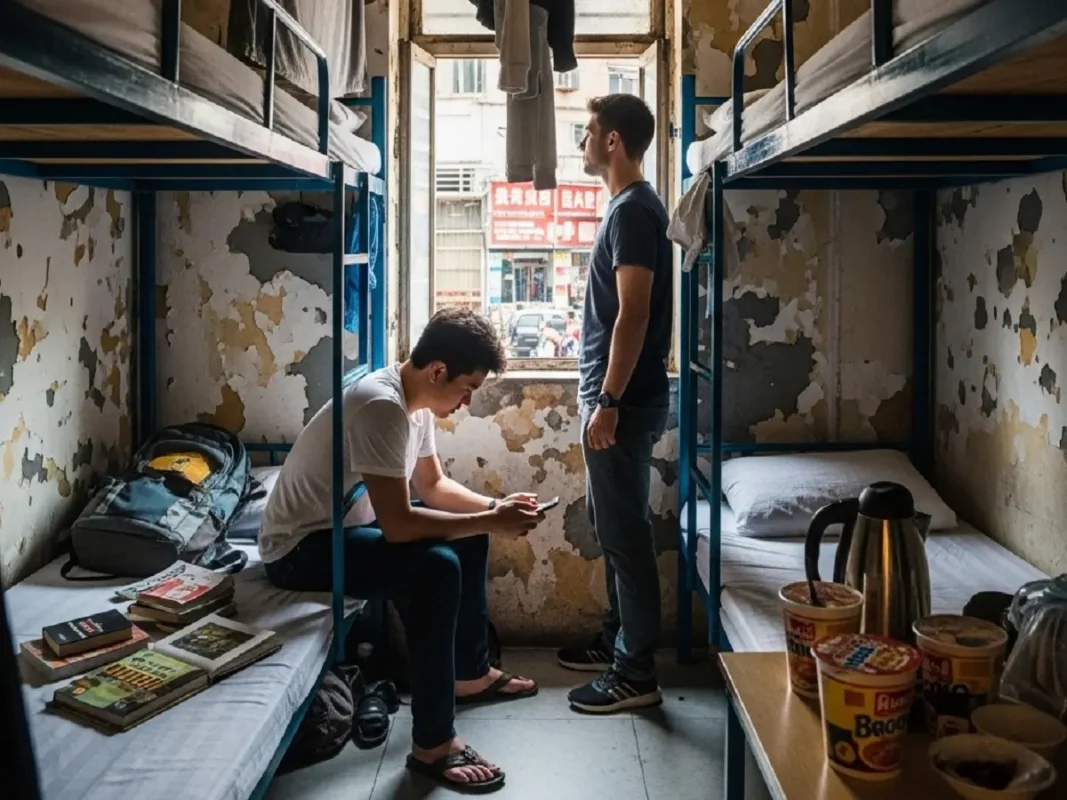
Private Girls Hostels
This is the most common option for female students.
A building is rented or owned by a hostel operator. Rooms are shared by 2 to 5 students. The hostel provides beds, cupboards, WiFi, and food (mess). A warden manages the rules and curfew time.
These are usually located near universities and colleges.
University Hostels
Some universities provide on-campus accommodation. Seats are limited, and priority goes to students from far cities. They are cheaper but have strict rules and long waiting lists.
Shared Apartments
Mostly chosen by senior students or working women. Students rent a flat together and divide rent, utilities, and groceries. This offers privacy but requires responsibility and time management.
Paying Guest Rooms (PG)
A room inside a family house. Meals may or may not be included. Parents often prefer this for younger students because it feels safer than a full hostel.
What Most Students Actually Choose
- In Pakistan, first-year students usually choose hostels.
- Reason is simple: food + security + easier routine.
After one or two years, many move to shared apartments with friends to reduce costs and get more freedom. Working women often choose single rooms or small flats near their office area instead of student zones.
Average Cost of Student Living in Pakistan
Living expenses depend on the city, area, and room type. Lahore and Islamabad cost more than Multan or Faisalabad. Karachi varies heavily by locality.
Below is a realistic monthly estimate based on common student spending patterns.
Monthly Hostel Rent Range
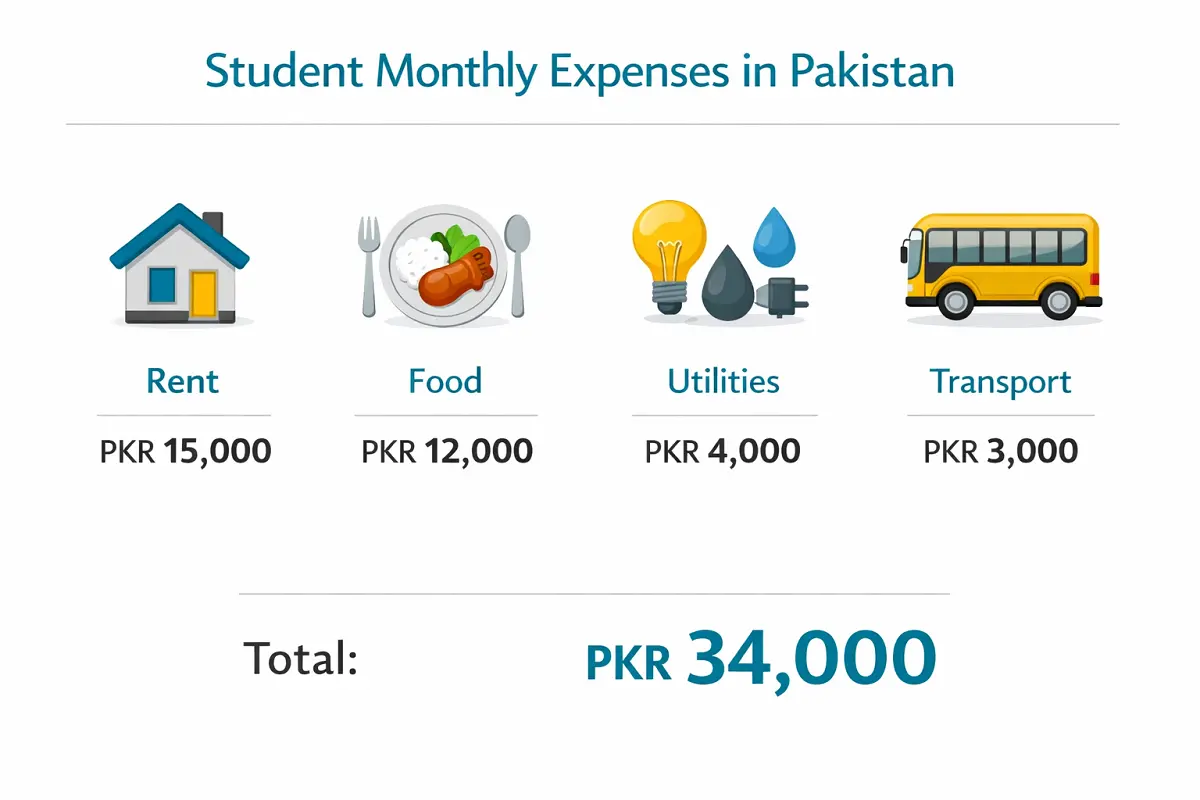
- Small cities: 8,000 – 18,000 PKR
- Mid-level cities: 12,000 – 25,000 PKR
- Major cities: 18,000 – 40,000 PKR
An attached bathroom and a smaller room sharing increase the rent.
Food and Mess Charges
Most hostels include 2 or 3 meals daily.
Typical mess charges:
4,000 – 9,000 PKR per month
Quality depends more on management than price.
Utilities and Internet
Usually included in hostel rent, but flats pay separately.
Average monthly share in apartments:
2,000 – 5,000 PKR
Total Monthly Student Budget Estimate
Average student spending in Pakistan:
- Low budget student: 15,000 – 22,000 PKR
- Mid-range student: 22,000 – 35,000 PKR
- Comfort living: 35,000 – 60,000 PKR
Travel and personal expenses are not included.
Budget Planning for a Full Academic Year
Most students calculate the monthly cost but ignore the yearly expenses. A smarter plan looks at the whole academic year.
Typical yearly expenses include:
- hostel deposit
- semester books
- winter clothing
- exam fees
- travel tickets
Students who track spending avoid sudden financial stress near exams.
A practical method:
Divide the expected yearly cost into monthly savings targets.
This helps especially students living away from major cities.
Seasonal Living Conditions in Different Cities
Weather affects comfort more than many students expect.
- Lahore and Multan summers are very hot. AC or good ventilation becomes necessary.
- Islamabad winters are cold. Heating arrangements matter.
- Karachi’s humidity affects room comfort and sleep quality.
Before choosing accommodation, students should check:
- ventilation
- sunlight exposure
- cooling or heating options
This directly affects health and study focus.
Best Cities in Pakistan for Students
Each city fits a different type of student. Some are affordable, some are career-focused, and some provide better security.
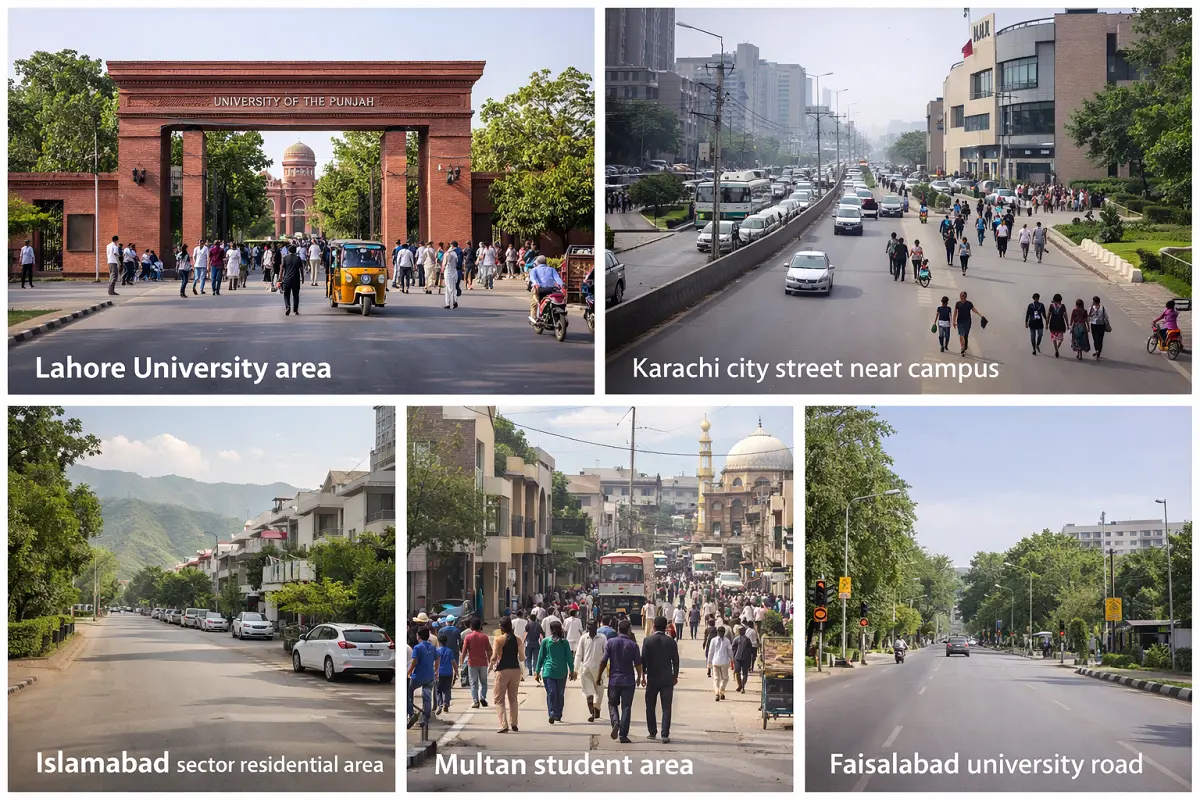
Lahore Student Accommodation
Lahore has the largest student population in Pakistan. Areas near Punjab University, UET, and FAST are full of hostels. Good for students who want an academic environment and a social life together. Costs are medium to high.
Karachi Student Accommodation
Karachi offers the most universities and the most job exposure. But distance and transport time matter a lot here. Best for independent students who can manage travel and busy routines.
Islamabad Student Accommodation
Islamabad is considered the most organized and peaceful city for students. Hostels are cleaner, but rent is higher. Popular among parents sending daughters from smaller cities.
Multan Student Accommodation
Multan is affordable and calm. Ideal for students who want a focused study routine without high expenses. Many families prefer Multan for first time hostel experience.
Faisalabad Student Accommodation
A practical city for degree-focused students. Living cost is low, and most universities have nearby hostel streets.
Peshawar Student Accommodation
Lower rent and smaller student zones. Students usually stay close to campus because city’s spread is limited.
Student Lifestyle and Daily Routine in Pakistan Hostels
Living in a hostel in Pakistan is very different from living at home. The daily schedule usually follows a shared routine because many students live in the same building.
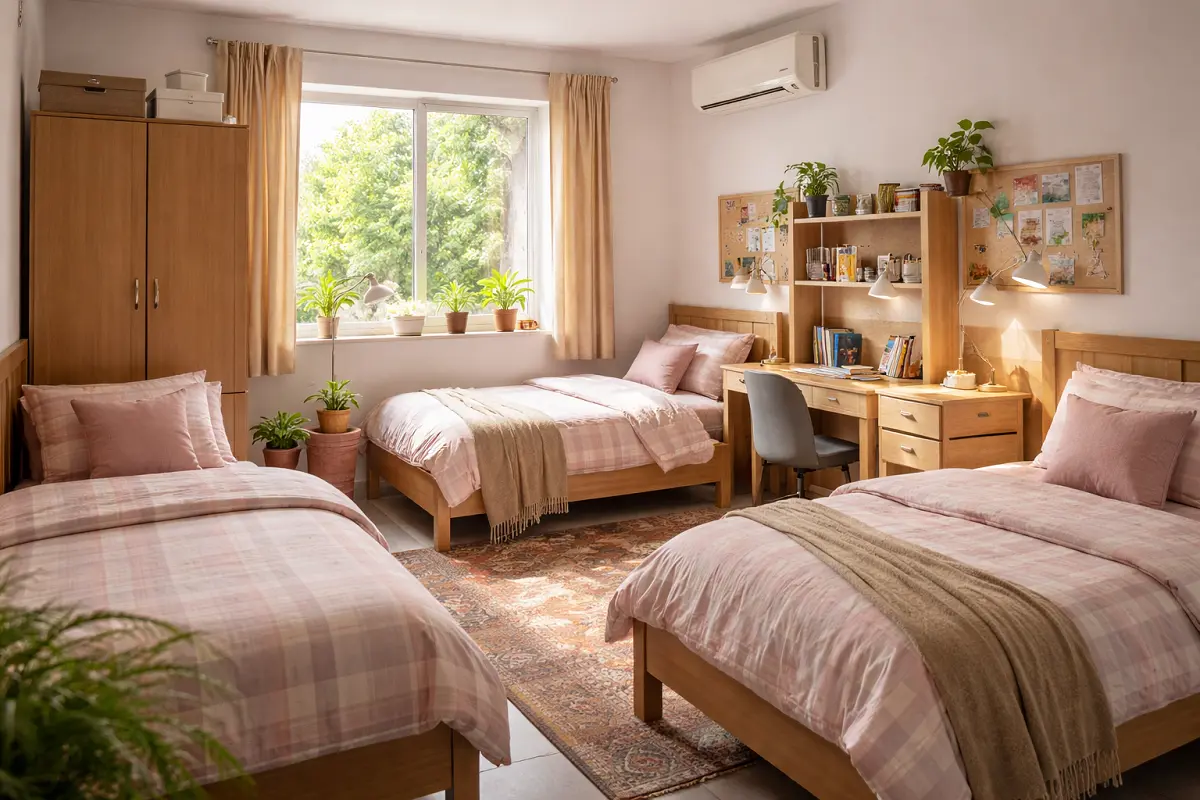
Morning normally starts early. Most hostels serve breakfast between 7:30 AM and 9:30 AM. Students who have morning classes adjust their routine around this time. In cities like Lahore and Islamabad, class schedules vary widely, so some students skip breakfast and rely on nearby cafes.
Afternoon is quieter. Many students attend university, libraries, or academies. Hostels become active again in the evening when everyone returns.
Nighttime is the most important part of hostel life. Study hours usually begin after dinner. Good hostels maintain silence late into the night so students can focus.
Students who adapt to a routine usually perform better academically because hostel life rewards discipline.
Food System in Student Hostels Across Pakistan
Food quality is one of the biggest deciding factors for students choosing accommodation.
Most hostels provide:
- Breakfast (egg, paratha, or bread)
- Dinner (roti, rice, vegetables, chicken or daal)
Lunch is often skipped because students are at university.
The difference between good and bad hostel management is not the menu. It is hygiene and consistency.
Common complaints students face:
- oily food
- repeated menu
- late dinner timing
Smart students check the kitchen before finalising a room. Talking to current residents gives the most honest feedback.
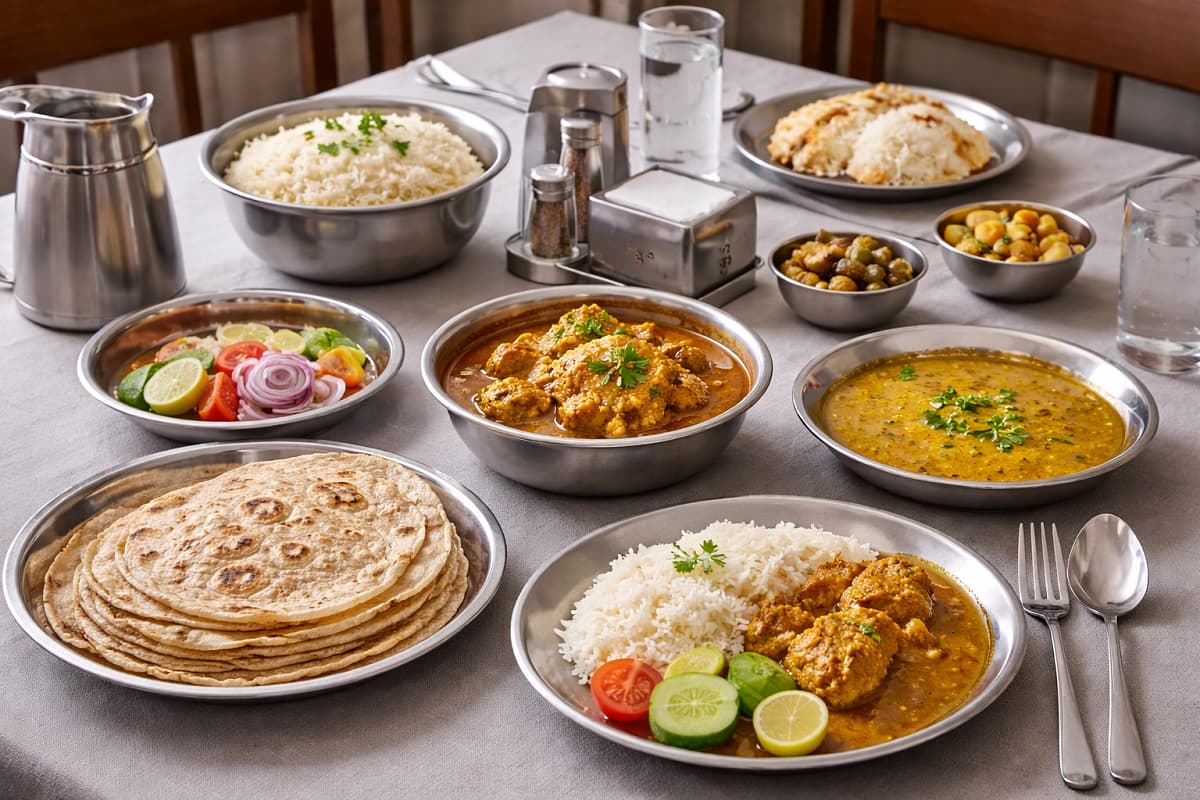
In large student areas like Gulgasht Multan, Johar Town Lahore, and sectors near Islamabad universities, students also rely on nearby mess services and tiffin systems as backup.
Internet and Study Environment
Today, every degree depends on internet access. Online portals, assignments, recorded lectures, and freelancing work require stable connectivity.
A good student hostel should provide at least:
- stable WiFi in rooms
- Backup during load shedding
- quiet study area
Students often make the mistake of checking internet speed only during daytime visits. Evening speed matters more because that is the peak usage time.
If multiple students share one router without proper bandwidth, studying becomes frustrating.
Mental Health and Social Life in Student Hostels
Hostel life teaches independence, but you can also feel lonely at first.
Students who adjust well usually:
- participate in a group study
- keep regular contact with family
- maintain sleep schedule
- balance social and academic time
Isolation mostly happens when routine breaks. Keeping structure prevents homesickness.
Cultural Adjustment for Students Moving Cities
Students moving from smaller towns to big cities face lifestyle adjustment more than academic pressure.
Common changes include:
- flexible schedules
- self management
- shared living habits
- budgeting decisions
Some students struggle in the first month because they never managed daily tasks before. Cooking, laundry, and time planning become personal responsibilities.
Parents also experience adjustment. Many call daily in the beginning. Gradually, both sides become comfortable as routine develops.
How Students Usually Change Accommodation Over Time
Accommodation choice often changes during the academic journey.
- Year 1: Hostel near the university for adjustment
- Year 2–3: Shared flat with friends
- Final year/job: Private room near workplace
This pattern is common across Pakistan because confidence and responsibilities increase with age. Parents should expect this transition instead of forcing one option for the entire degree duration.
Common Mistakes Students Make While Choosing Accommodation
Many problems occur because of rushed decisions. Students often:
- choose cheapest option without visiting
- Ignore roommate compatibility,
- forget transport cost,
- Trust the photos instead of the inspection
- Pay advance without written terms
A careful decision saves months of discomfort.
Safety of Female Students Living Away From Home in Pakistan
Safety is the first concern for most families. Rent and facilities matter, but security decides the final choice. The good news is this: most established girls hostels in Pakistan operate with strict rules.
The system is built around supervision and controlled entry. Still, standards vary. That is why students and parents must know what to check.
How Girls Hostels Operate in Pakistan
Most registered hostels follow a similar structure:
- Female warden on-site
- Fixed curfew time
- Visitor entry log
- CCTV cameras in common areas
- Security guard at the main gate
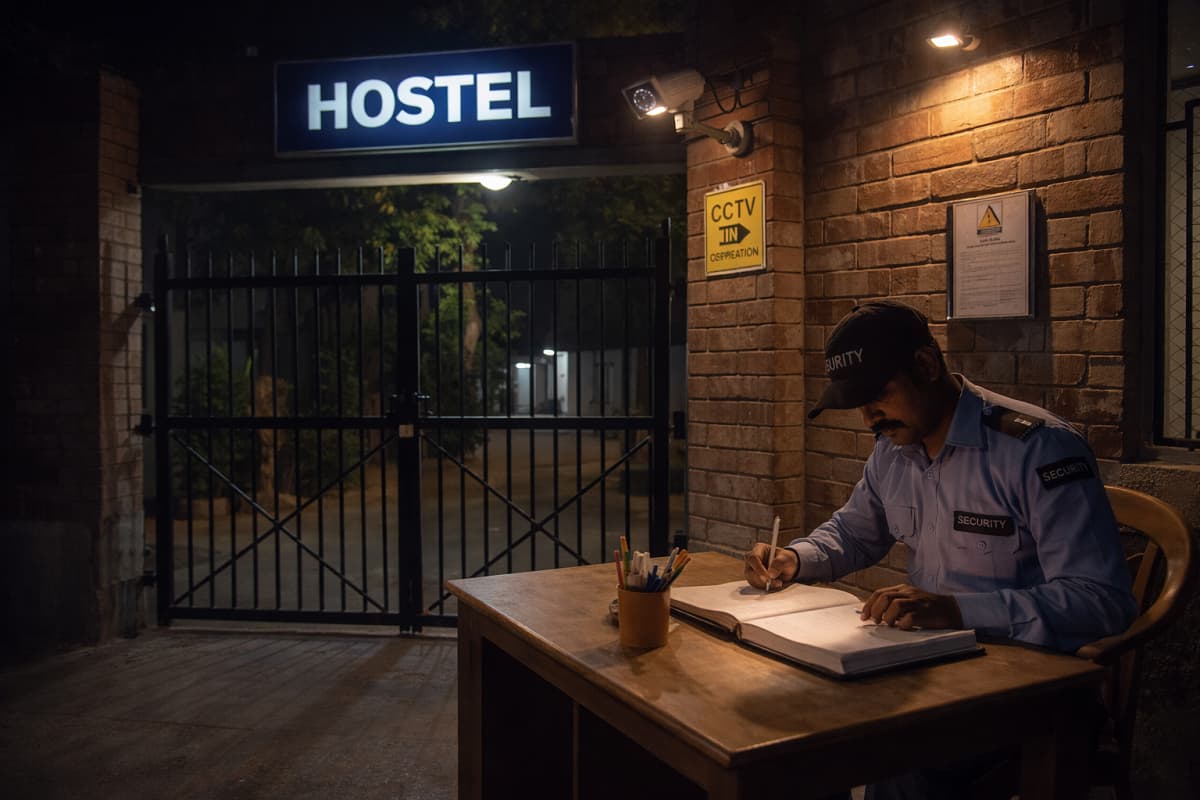
Hostels near major universities in Lahore, Islamabad, and Karachi usually follow stronger safety practices because demand is high and parents expect strict management. Smaller cities may have fewer formal systems, so physical visits matter more.
What Parents Usually Check Before Finalizing
Parents commonly ask:
- Is there 24-hour security?
- Who controls visitor access?
- Are male staff allowed inside the living floors?
- What is the curfew time?
- Is there a backup power system?
They also check nearby markets, hospitals, and transport access. Safety is not just about cameras. It is about management attitude. A strict but respectful environment works best for students.
Red Flags Students Should Avoid
Watch out for:
- No female warden
- No visitor record system
- Overcrowded rooms beyond capacity
- No emergency exit plan
- Advance payment without a receipt
If the hostel owner avoids questions about rules, that is usually a warning sign.
How to Choose the Right Student Accommodation in Pakistan
Here’s the thing. Most students choose based on rent only. Later, they regret it. The right decision depends on three factors: distance, comfort, and long-term budget.
Hostel vs Apartment vs Sharing
Hostel is best for:
- First-year students
- Students from small cities
- Those who want food included
Shared apartment is better for:
- Senior students
- Working women
- Students who prefer privacy
Paying guest option suits:
- Younger students
- Parents who want a family environment
There is no single perfect option. It depends on personality and stage of life.
Distance from University Matters More Than Rent
- Saving 5,000 PKR on rent means nothing if you spend two hours daily in traffic.
- In cities like Karachi and Lahore, transport time affects routine, safety, and academic focus.
- Ideally, choose accommodation within walking distance or one direct ride from campus.
Facilities Students Actually Need
Forget luxury features. Focus on basics:
- Clean water supply
- Reliable electricity backup
- Good ventilation
- Stable internet connection
- Quiet study environment
Fancy furniture does not improve grades. A peaceful room does.
Moving to a New City for Study in Pakistan
Moving is stressful, especially for first-time hostel students. Planning reduces mistakes.
Before Arrival Checklist
- Confirm rent and deposit in writing
- Ask for a video tour if visiting is not possible
- Confirm the mess timing and curfew
- Ask about the refund policy
- Check Google Maps distance from campus
Never rely only on phone promises.
First Week Adjustment
The first week feels uncomfortable for many students.
Set simple habits early:
- Fix sleep schedule
- Learn about nearby shops
- Save emergency contacts
- Meet roommates politely
Routine builds stability.
Settling for Long-Term Living
After one month, students usually adapt.
At this stage:
- Track monthly expenses
- Improve study setup
- Build positive roommate relationships
- Avoid hostel conflicts
Long-term success depends more on discipline than location.
Transport and Commute Reality for Students
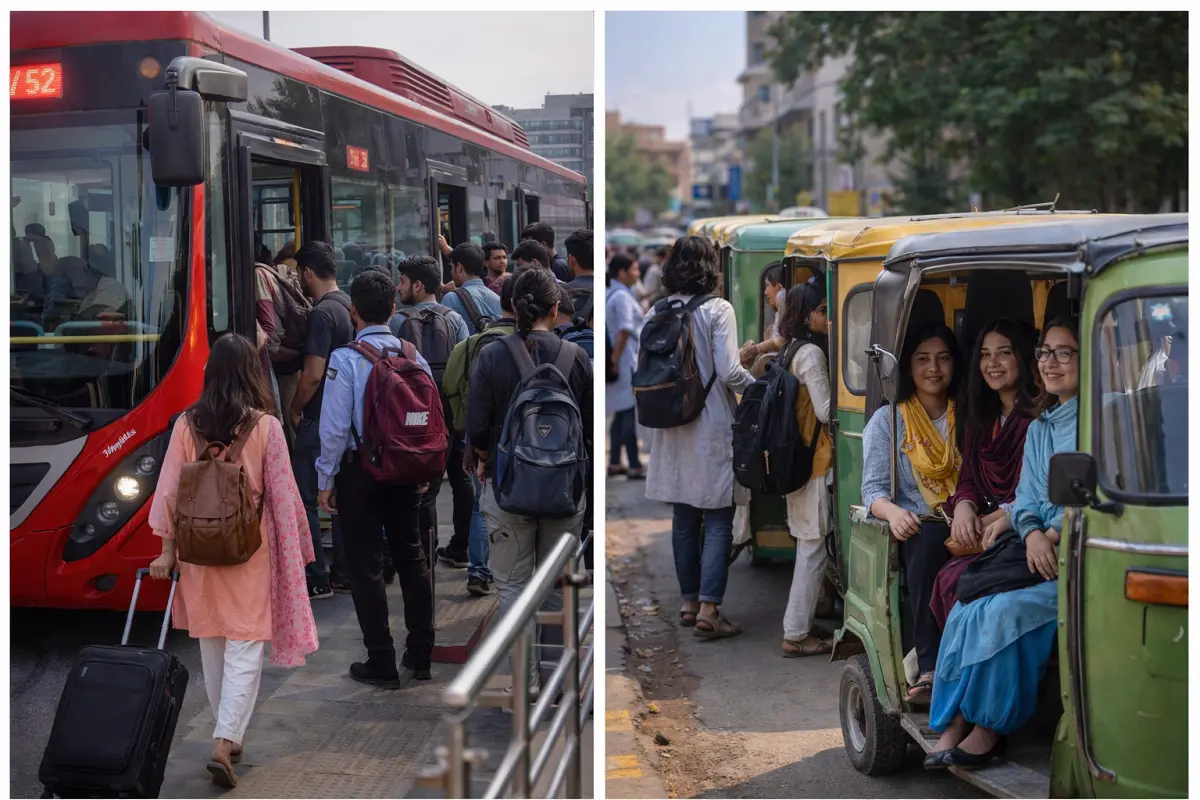
Distance looks small on a map, but daily travel changes the student experience.
- In Karachi, even 7 kilometres can take an hour due to traffic.
- In Lahore, rush hours affect class punctuality.
- In Islamabad, distances are larger, but roads are smoother.
Students living near campus save:
- time
- transport money
- mental energy
Public transport options include:
- university buses
- metro systems (Lahore, Islamabad, Rawalpindi)
- rickshaw and bike ride services
Choosing a slightly expensive hostel near campus often reduces total monthly expenses.
Accommodation Near Universities in Pakistan
Many students search using university names instead of city names.
Examples:
- Hostels near Punjab University
- Accommodation near NUST Islamabad
- Girls hostel near the University of Karachi
This is why choosing accommodation near campus matters for both safety and time management.
Each major university zone in Pakistan has its own hostel cluster. Students should explore area-specific guides for detailed comparisons.
Why Pakistan Student Accommodation Works Differently From Other Countries
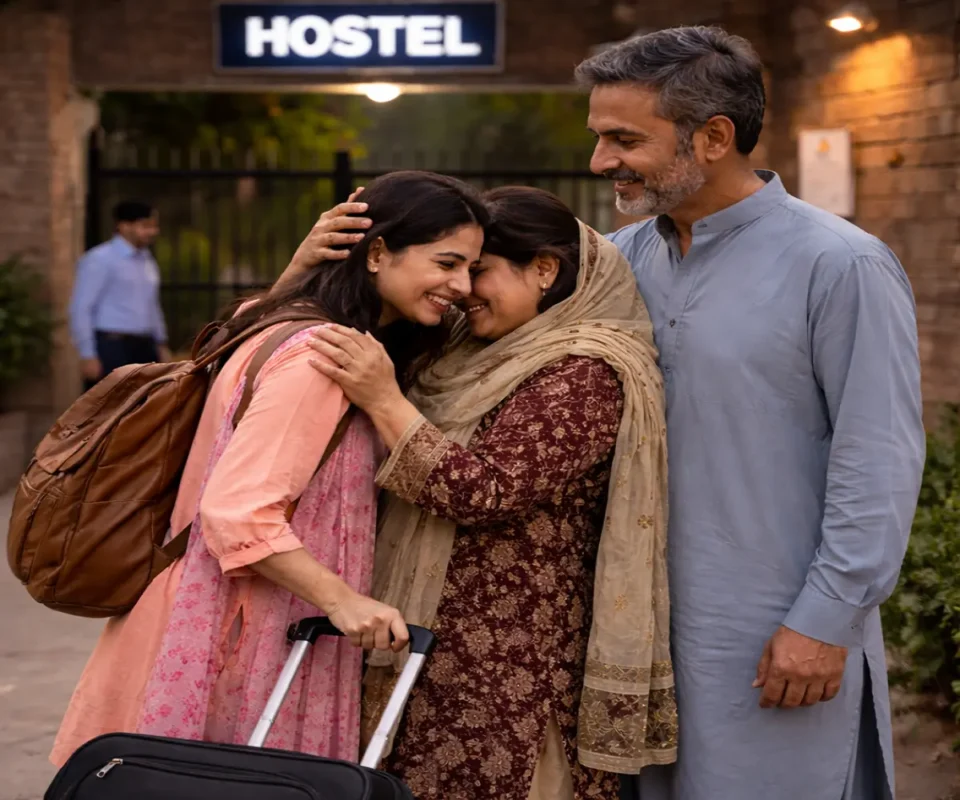
- In many countries, students live independently at 18.
- In Pakistan, family supervision remains important.
Because of this:
- Girls hostels have stricter rules
- Wardens play a major role
- Parents stay involved in decisions
This system may feel strict, but it helps younger students adapt safely to city life.
FAQ’s?
Average monthly living cost ranges between 20,000 and 40,000 PKR, depending on the city and room type.
Most established girls hostels operate with curfew rules, wardens, and security systems. Safety depends on management quality and location.
Multan and Faisalabad are generally more affordable than Lahore, Islamabad, and Karachi.
University hostels are cheaper but have limited seats. Private hostels offer more flexibility but cost more.
Yes, especially senior students and working women. However, first-year students often prefer supervised hostels.
Conclusion
Student accommodation in Pakistan is diverse. Every city offers different costs, lifestyles, and safety standards. The best choice depends on your budget, university location, and comfort level. Some students prefer structured hostel life. Others move to shared flats after gaining confidence.
If you are choosing a city, start by exploring detailed guides for each major student city in Pakistan. Compare rent, safety, and campus distance before making a final decision. A smart housing choice makes student life easier. A rushed decision creates stress for the whole year.

