



Planning to study abroad sounds exciting — new city, new friends, new independence.
Then reality hits: where will you live? Choosing the right student accommodation affects almost every part of your student life. It shapes your daily routine, your budget, your safety, and even your grades.
A noisy place reduces focus. A long commute drains energy. A bad contract creates stress that lasts months. This guide explains how student accommodation works across major destinations worldwide. You will learn what to expect, what mistakes to avoid, and how to choose confidently before you arrive.
What Student Accommodation Actually Means
Students often assume housing works the same everywhere. It doesn’t. Countries use different systems, contracts, and expectations.
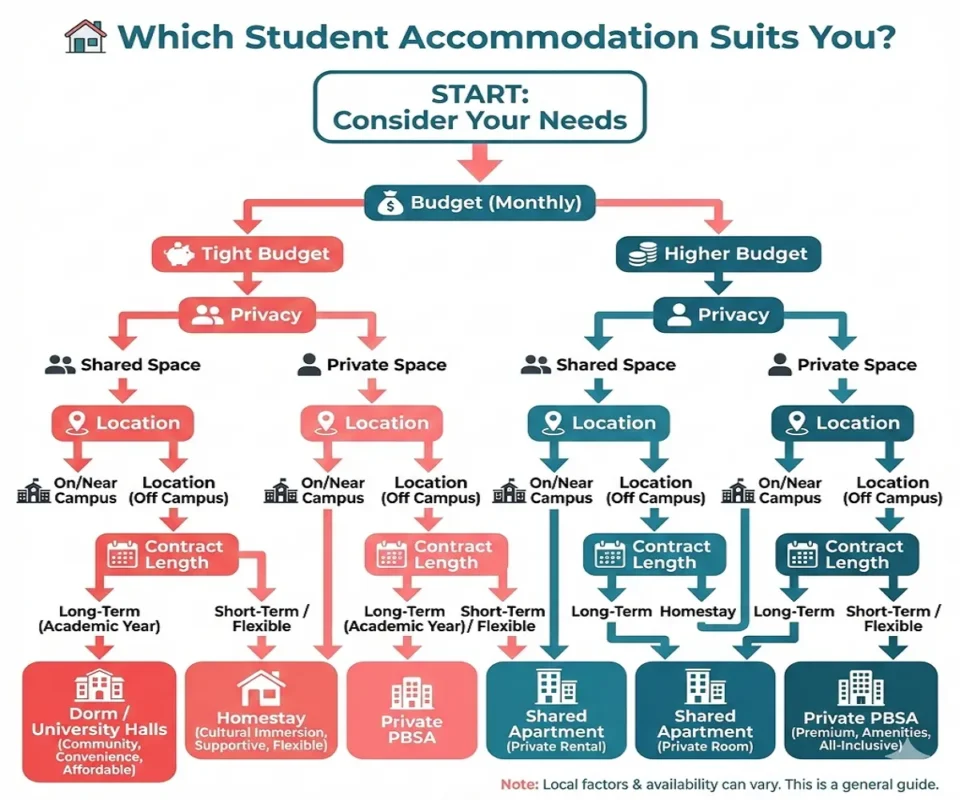
Most student accommodation falls into four global categories.
1. University Dormitories
Universities operate these buildings on campus.
Good for
- First-year students
- International arrivals
- Easy adjustment
Limitations
- Less privacy
- Shared facilities
- Fixed rules
Dormitories help you settle quickly because everything sits nearby: classes, library, cafeteria, and support services.
2. Private Student Residences (PBSA)
Private companies build modern student housing complexes.
Good for
- Safety
- Clean facilities
- Stable contracts
Limitations
- Higher rent
- Limited personalization
This option grows rapidly in the USA, UK, Australia, and Europe because students want predictable living conditions.
3. Shared Apartments
Students rent flats together and divide expenses.
Good for
- Independence
- Lower rent
- Flexible lifestyle
Limitations
- Shared responsibilities
- Utility management
Students usually choose this after their first year abroad.
4. Hostels and Female-Only Housing
Common in South Asia and some chunks of Europe.
Good for
- Supervised environment
- Community living
- Parental comfort
Limitations
- Curfews
- Rules
Student Accommodation by Country
Now let’s explore how student accommodation works in different destinations.
Australia
Australia encourages students to arrange housing before arrival.
Typical choices
- Campus accommodation
- Private student residences
- Shared rentals
Reality check
Cities matter. Sydney and Melbourne cost far more than the regional areas. Living close to campus often saves transport money, even if rent looks higher.
Tip: Comparethe weekly transport cost before picking a distant apartment.
Canada
Many universities suggest temporary housing first and permanent housing after arrival.
Options
- On-campus residences
- Shared apartments
- Homestays
Important factors
Heating costs change your budget in winter. Always ask whether utilities are included. Large cities such as Toronto and Vancouver cost much more than smaller towns.
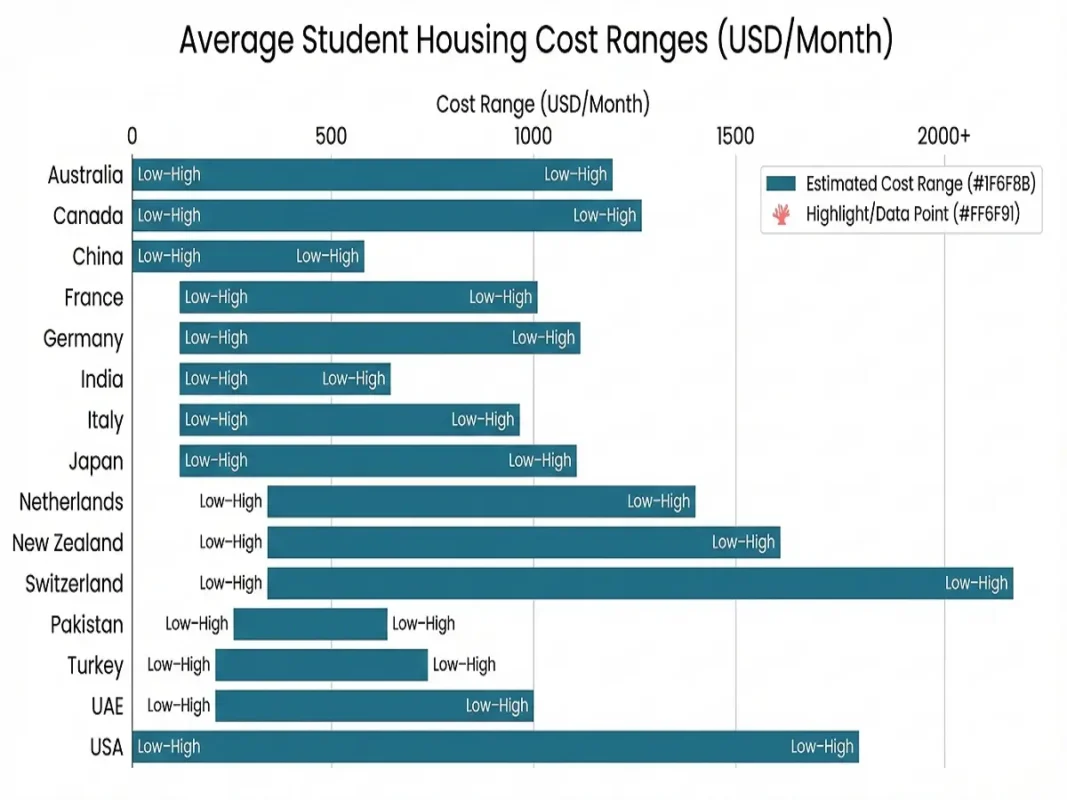
| Country | Typical Options | Range (USD) | Notes | Source |
| Australia | Dorm / PBSA / Shared Apt | $700 – $1,400 | Bond usually is 2–4 weeks rent | Study Australia + Numbeo |
| Canada | Dorm / Shared Apt / Homestay | $600 – $1,300 | Heating cost varies by city | IRCC + Numbeo |
| China | University Dorm / Apartment | $150 – $500 | Dorm is often the cheapest in the first year | University Housing Pages |
| France | CROUS / Shared Apt / Studio | $400 – $1,100 | Housing aid possible | Campus France |
| Germany | Dorm / WG Shared Flat | $350 – $850 | Waiting lists common | DAAD Germany |
| India | Hostel / PG / Flat | $120 – $400 | Meals often included | Local University Housing |
| Italy | Shared Apt / Private Room | $450 – $1,000 | Utilities extra | Student.com + Numbeo |
| Japan | Dorm / Share House | $350 – $900 | Key money may apply | JASSO Japan |
| Netherlands | Student Residence / Shared | $600 – $1,200 | Housing shortage in cities | Dutch University Housing |
| New Zealand | Hall / Shared Apartment | $650 – $1,200 | Auckland expensive | Education NZ |
| Switzerland | Shared Apt / Studio | $900 – $1,800 | High-quality housing | Swiss Universities |
| Pakistan | Girls Hostel / Shared | $70 – $250 | Meals included | Local Listings |
| Turkey | Dorm / Shared Apt | $150 – $500 | Government dorm affordable | Turkish University Dorms |
| UAE | Residence / Apartment | $700 – $1,600 | Contracts strict | University Accommodation |
| USA | Dorm / Apartment | $800 – $1,800 | Highly city-dependent | US Federal Student Aid |
China
Chinese universities usually provide international dormitories.
Key points
- Often required in the first year
- Close to campus
- Affordable
Students later move to apartments if they want independence. You must register your residence with the local authorities after moving in.
France
France offers public student housing known as CROUS residences.
Things to expect
- Waiting lists
- Documentation requirements
- Financial aid possibilities
Paris housing costs much more than in other cities. Students commonly share apartments to reduce rent.
Germany
Germany offers affordable education and competitive housing.
Common living types
- Dormitories
- Shared flats (WG)
- Private rooms
Students must register their address after moving in. Waiting lists exist in major cities, so early applications help.
India
India provides structured hostel and paying guest housing.
Typical structure
- Monthly payment
- Meals included
- Curfew rules
Families prefer this system because it feels safer for students moving away from home.
Italy
Italian universities rarely guarantee housing.
Normal solution
Students share apartments to manage expenses.
Important
Utility bills vary seasonally due to building insulation differences.
Japan
Japan offers organized student housing systems.
Housing types
- University dormitories
- Share houses
- Small apartments
You may pay “key money” when renting privately. Dormitories help students adjust before moving independently.
Netherlands
The Netherlands faces housing shortages in major cities.
Students must arrange accommodation before arrival whenever possible.
Many live outside city centers and commute by bicycle or train.
New Zealand
New Zealand provides halls of residence and homestays. Auckland costs more than smaller towns. Tenancy laws protect renters, but you must read agreements carefully.
Switzerland
Switzerland offers high-quality housing, but expensive rent. Students usually share apartments to control costs.
Pakistan
Female hostels remain a common choice.
Includes
- Shared rooms
- Meals
- Security supervision
- Monthly payment
Always visit physically before confirming admission.
Turkey
- Turkey offers government and private dormitories.
- Affordable living and campus proximity attract many international students.
- Residence registration is required after moving in.
United Arab Emirates
Universities cooperate with private housing providers. Contracts stay clear and strict. Major cities cost more, so location selection matters.
United States
Many US universities encourage first-year students to live on campus.
Housing types
- Dormitories
- Student complexes
- Shared apartments
Lease agreements create legal responsibility, so read carefully before signing. Costs vary widely by state and city.
How to Compare Student Accommodation
| Country | Deposit Rules | Registration Required | Contract Length | Booking Lead Time | Source |
|---|---|---|---|---|---|
| Australia | Refundable bond | No | 6–12 months | 2–3 months | Study Australia |
| Canada | Security deposit | No | 6–12 months | 1–2 months | IRCC |
| China | Deposit common | Yes | Semester / Year | Before arrival | University Rules |
| France | Deposit 1 month | Yes | 9–12 months | 2–4 months | Campus France |
| Germany | 2–3 month deposit | Yes | 6–12 months | 3–5 months | DAAD |
| India | 1 month advance | No | Monthly | 1 month | Local Hostels |
| Italy | 1–2 month deposit | Yes | 12 months | 3 months | Uni Housing |
| Japan | Deposit + key money | Yes | 12 months | 2–3 months | JASSO |
| Netherlands | Deposit required | Yes | 6–12 months | 3–5 months | University Housing |
| New Zealand | Bond required | No | 6–12 months | 2 months | Tenancy NZ |
| Switzerland | Deposit required | Yes | 12 months | 3–5 months | Swiss Student Housing |
| Pakistan | Monthly advance | No | Monthly | 1 month | Hostel Policy |
| Turkey | Deposit small | Yes | Semester | 2 months | Dorm Guidelines |
| UAE | Deposit required | Yes | Yearly | 2–3 months | University Housing |
| USA | Security deposit | No | 9–12 months | 2–4 months | Federal Student Aid |
Use this five-step method.
1. Distance
Closer housing improves academic performance.
2. Safety
Check access control, staff presence, and neighborhood reputation.
3. Contract
Understand the deposit refund and notice period.
4. Real Cost
Add utilities, transport, and food — not just rent.
5. Legal Rules
Every country handles tenant rights differently.
Common Student Mistakes
- Waiting until the last minute
- Choosing the cheapest option only
- Ignoring commute time
- Not reading contracts
These mistakes create long-term problems.
Booking Timeline Guide
- 3–6 months before: research housing
- 2–3 months before: apply and shortlist
- 1 month before: confirm and prepare documents
- Arrival week: inspect and finalize
Preparation Checklist
Before departure:
- Check the university housing page
- Verify listing authenticity
- Confirm temporary stay
- Understand deposit rules
- Plan travel route
Safety Tips for Students
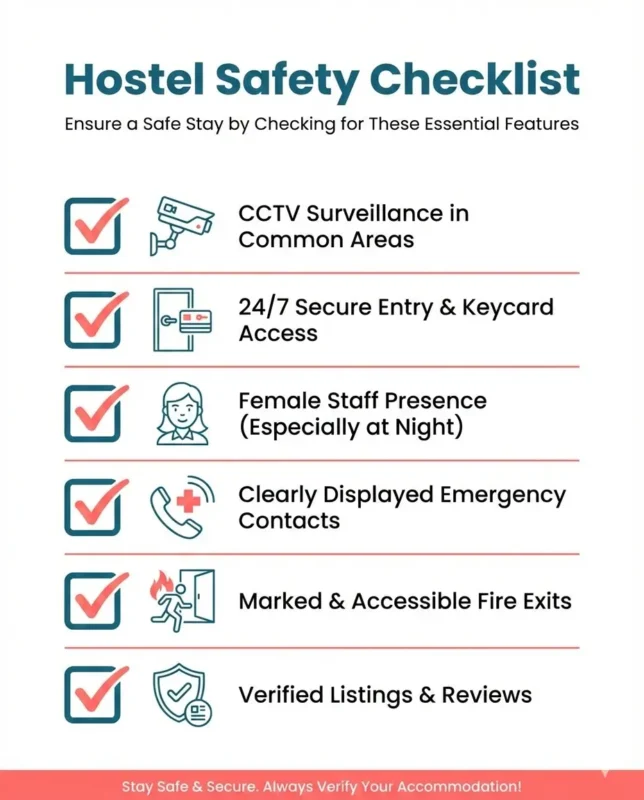
- Avoid cash payments without receipts
- Verify landlord identity
- Share the address with family
- Save emergency contacts
Safety matters more than furniture quality.
FAQ’s?
Student accommodation refers to housing options specifically designed or commonly used by students. These include university dormitories, private student residences, shared apartments, homestays, and hostels. The type you choose depends on your budget, location, and personal preference.
Student accommodation costs vary by country and city. In most countries, monthly rent ranges between $150 and $1,800 USD, depending on location, housing type, and included utilities. Major cities like New York, London, and Sydney cost significantly more than smaller towns.
You should start searching 3–6 months before your intake begins. In high-demand cities, housing fills quickly, especially near universities. Early booking increases your chances of securing safe and affordable accommodation.
University dormitories and private student residences usually offer higher security through access control, staff presence, and student-only entry systems. Private apartments can also be safe, but you must verify the neighborhood and landlord carefully.
Most countries require proof of university admission, a passport copy, a visa (if applicable), and a security deposit. Some locations may also require a guarantor or local registration after arrival.
Final Thoughts
Student accommodation differs worldwide, but smart decision-making stays universal.
- Start early
- Verify information
- Read contracts
- Prioritize safety
A comfortable living environment supports focus, confidence, and academic success. Because during exam week, peace always mattersmore than decoration.

