



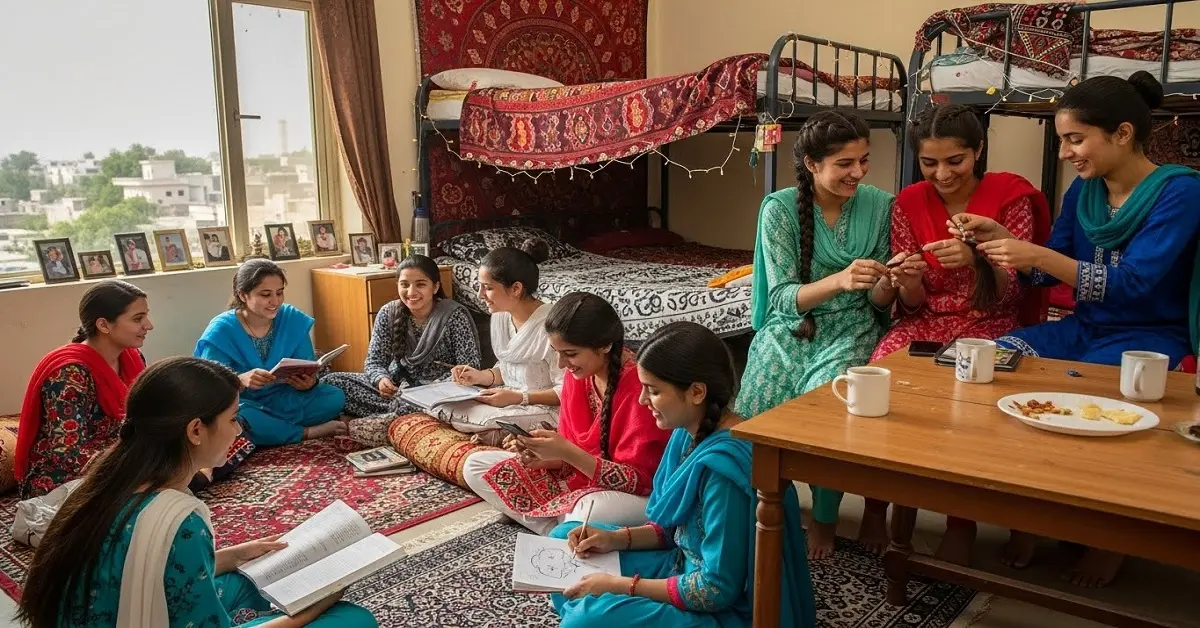
The unique culture of girls hostels in Multan represents far more than simple living arrangements.
In essence, it embodies a transformative ecosystem where young women from diverse backgrounds converge to pursue education, build careers, and gradually discover their independent identities. Moreover, nestled in the heart of Punjab’s cultural capital, Multan’s girls hostels have evolved into powerful microcosms of female empowerment, seamlessly blending traditional Pakistani values with modern aspirations.
Multan, often called the “City of Saints,” carries centuries of rich heritage, and this cultural depth profoundly influences the hostel experience for young women. Unlike hostels in more cosmopolitan cities, Multan’s girls hostels maintain a distinctive character. One that honors familial traditions while fostering unprecedented independence for female students and professionals.
Historical Roots of the Unique Culture of Girls Hostels in Multan:
To truly understand the unique culture of girls hostels in Multan, one must first appreciate their historical evolution. Decades ago, for instance, the idea of young women living independently away from family was virtually unthinkable in this conservative region. Consequently, education for girls often ended at the boundaries of their own neighborhoods.
The establishment of institutions like Bahauddin Zakariya University in 1975 marked a watershed moment. Consequently, as educational opportunities expanded, the need for safe, supervised accommodation became undeniable. As a result, the first girls hostels were built with fortress-like security and strict regulations, reflecting deep societal concerns about female safety and honor.
Today’s landscape, however, tells a very different story. Modern facilities such as Tulip Girls Hostel, along with university-managed accommodations, now offer environments that balance protection with personal growth. Consequently, this evolution mirrors Multan’s broader social transformation, where families increasingly recognize education and career development as essential for their daughters.
Girls Hostel Near Shah Shams Colony Multan
Architectural Psychology Behind the Unique Culture of Girls Hostels:
The physical design of girls’ hostels in Multan reveals much about their cultural philosophy. Unlike typical rental accommodation, these spaces are intentionally crafted to facilitate both community and privacy, a delicate balance crucial to the hostel experience.
Where Traditional Culture Meets Functional Hostel Life:
Most hostels in Multan, therefore, feature a design style that respects both the local climate and cultural sensitivities. Consequently, high ceilings and cross-ventilation help combat the city’s intense summer heat. Moreover, enclosed courtyards provide secure gathering spaces without external observation, reflecting a design tradition rooted in classic haveli architecture.
Common areas typically include:
| Space Type | Cultural Purpose | Social Function |
| Central Courtyard | Protected outdoor gathering | Evening conversations, group study, festivals |
| Shared Kitchen | Collective meal preparation | Skill sharing, regional food exchange |
| Prayer Room | Spiritual practice | Communal worship, meditation, reflection |
| TV Lounge | Controlled entertainment | News watching, entertainment, discussions |
| Study Hall | Academic focus | Collaborative learning, exam preparation |
| Dining Area | Collective meals | Relationship building, daily routine |
These spaces aren’t merely functional; they’re designed to facilitate the specific type of community that defines hostel culture in Multan.
Girls Hostel In Royal Orchard Multan
How Social Relationships Define the Culture of Girls Hostels:
Ultimately, the unique culture of girls hostels in Multan is most vividly expressed through the relationships formed within their walls. In contrast to typical friendships, these bonds are fundamentally different, as they are forged through shared challenges, limited privacy, and, over time, collective personal growth.
From Strangers to Sisters: Life Inside Girls Hostel Rooms
Sharing a room with three or four other young women creates an intimacy that’s simultaneously challenging and profoundly bonding. In Multan’s hostels, roommates often come from vastly different backgrounds. A girl from rural Muzaffargarh might share space with someone from Lahore’s urban sprawl. While a Saraiki speaker rooms with a Punjabi counterpart.
This forced proximity becomes a masterclass in human relations. Residents learn to:
- Navigate different sleep schedules and study habits
- Respect varying levels of religiosity and cultural practice
- Mediate conflicts over shared resources
- Celebrate diverse regional festivals and traditions
- Support each other through homesickness and academic pressure
Hostel Family Culture and Female Bonding in Girls Hostels:
Moreover, a distinctive feature of hostel culture in Multan is the emergence of chosen families. In this system, senior residents often adopt mentorship roles, thereby guiding newcomers through the adjustment period. As a result, this senior-junior structure, commonly called the hostel family or hostel khandan, creates hierarchical yet genuinely supportive networks.
Seniors help juniors with:
- Understanding hostel rules and unwritten codes
- Navigating relationships with wardens and staff
- Finding resources in the city
- Connecting with faculty or employers
- Managing homesickness and cultural adjustment

Daily Life and Community: Building Routines in Girls Hostels
The unique culture of girls hostels in Multan pulses with distinctive daily rhythms that differ markedly from life at home or in private accommodations.
Morning Rituals: The Synchronized Start
The morning hours in a girls’ hostel in Multan often resemble a carefully choreographed dance. Initially, the call to Fajr prayer serves as a natural alarm clock for many; however, others continue sleeping until the inevitable bathroom rush begins. Consequently, shared facilities necessitate cooperation, and over time, valuable lessons in patience are learned through daily practice.
Evening Transformations: When Hostel Culture Truly Emerges
If mornings are largely functional, then evenings are when the unique culture of girls hostels in Multan truly flourishes. After meeting the academic and professional demands of the day, residents return to their hostel sanctuary; consequently, the space undergoes a remarkable transformation.
Typical Evening Activities:
| Time | Common Activities | Cultural Significance |
| 5:00-6:00 PM | Maghreb prayer, personal time | Spiritual grounding, decompression |
| 6:00-7:00 PM | Courtyard gatherings, tea sessions | Informal bonding, daily debrief |
| 7:00-8:00 PM | Dinner service, communal eating | Main social meal, news exchange |
| 8:00-9:00 PM | Group study sessions, TV time | Academic collaboration, entertainment |
| 9:00-10:00 PM | Room conversations, late snacks | Deep bonding, problem-solving |
| 10:00-11:00 PM | Preparation for next day, sleep prep | Winding down, planning |
| 11:00 PM | Lights out (official), actual varied | Individual routines, late-night talks |
During these hours, the courtyard gradually becomes the heart of hostel life. Consequently, small groups form naturally; some discuss the day’s events, while others plan weekend outings, and meanwhile, a few seek advice on personal matters. Moreover, tea culture thrives in girls hostels in Multan, as residents take turns preparing chai and sharing snacks brought from home.
Food, Culture, and Community Life in Girls Hostels:
Perhaps nowhere is the unique culture of girls hostels in Multan more apparent than in the relationships residents develop with food. Although hostel meals are often criticized for limited quality and variety, paradoxically, they become lasting sources of both complaint and nostalgia over time.
The Mess Hall Experience:
Standard hostel fare in Multan typically includes:
- Breakfast: Paratha or toast with eggs, chai
- Lunch: Rice, dal, seasonal vegetable, occasional chicken
- Dinner: Roti, lentils or curry, vegetables
While this menu rarely wins culinary awards, it serves important cultural functions. The dining hall is where residents from all rooms must interact, breaking down cliques and facilitating broader community connections.
Food From Home: Currency of Love and Connection
The arrival of ghar ka khana (food from home) transforms hostel dynamics entirely.
When a resident’s family visits bearing tiffins of homemade specialties, an unwritten code of sharing prevails. Sindhi biryani, Balochi sajji, and Sand araiki sohan halwa are these regional delicacies becoming ambassadors of culture, introducing residents to Pakistan’s incredible diversity.
The Communal Cooking Phenomenon:
Many hostels in Multan now provide communal kitchens where residents can prepare meals on weekends or special occasions. These cooking sessions evolve into cultural exchanges:
- A girl from Bahawalpur teaches others to make proper khaddi kabab
- A Kashmiri student demonstrates how to cook authentic rogan josh
- Urban Multan natives share family recipes for special meetha (sweets)
- Health-conscious residents experiment with fusion recipes

Celebrating Tradition and Togetherness in Girls Hostels:
The unique culture of girls hostels in Multan shines brightest during festivals and celebrations. Separated from families during traditional holidays. Residents create their own versions of celebrations that blend homesickness with creativity.
Major Celebrations in Hostel Calendar:
| Festival/Event | Hostel Adaptation | Cultural Impact |
| Eid ul-Fitr/Adha | Collective prayers, shared meals, mehndi nights | Reduced homesickness, interfaith understanding |
| Basant | Rooftop kite flying (where permitted), yellow dress day | Cultural preservation, joy |
| Defense Day | Patriotic programs, national songs, flag ceremonies | Civic education, unity |
| Birthdays | Midnight celebrations, surprise decorations, cake cutting | Personal recognition, bonding |
| Exam Success | Treat parties, relief celebrations | Shared achievements, motivation |
| Farewell Events | Emotional send-offs for seniors, talent shows | Continuity, legacy building |
Birthday Culture: The Midnight Tradition
A particularly distinctive element of hostel culture in Multan is the midnight birthday celebration. As the clock strikes twelve, friends gather in the birthday girl’s room with cake (often smuggled past security), decorations, and heartfelt wishes. The joy of being celebrated away from family, by chosen friends, creates memories that last a lifetime.
Social Norms and Unspoken Rules in Girls Hostels:
Every girls hostel in Multan operates under two distinct sets of rules: on the one hand, the official regulations posted on notice boards, and on the other, the unwritten social codes that truly govern daily life. Therefore, understanding these implicit rules becomes essential for successfully thriving within hostel culture.
The Borrowing Economy:
A fascinating micro-economy emerges in hostels around borrowed items:
Borrowing Hierarchy (Most to Least Acceptable):
- Always OK: Shampoo for one use, phone charger, pen, notebook
- Ask First: Clothes, shoes, makeup, hair tools, books
- Special Permission: Expensive items, jewelry, personal electronics
- Never Without Explicit Offer: Food, money, prescription medications
The ability to navigate this borrowing culture gracefully marks social competence. Residents who share generously gain social capital, while those who refuse reasonable requests risk isolation.
Privacy Negotiations in Shared Spaces:
In rooms housing four to six young women, privacy becomes a carefully negotiated commodity. Unwritten protocols emerge:
- Headphone Rule: When someone wears headphones, they’re signaling “do not disturb.”
- Study Hours: Evening hours before exams are a sacred, quiet time
- Phone Call Courtesy: Taking long personal calls in the corridor or courtyard
- Curtain System: Some rooms have curtain dividers for temporary privacy
- Respect Hours: Early sleepers get consideration, as do late studiers

Authority and Care Dynamics in Girls Hostel Management:
To fully understand the unique culture of girls hostels in Multan, one must first appreciate the complex role of the hostel warden. In this context, the warden occupies a position that balances authority and caregiving, a role that is distinctively Pakistani.
Beyond Rule Enforcement:
Effective wardens in Multan’s girls hostels function as:
- Surrogate Mothers: Checking on sick students, offering advice
- Conflict Mediators: Resolving disputes between residents
- Safety Coordinators: Managing security and emergency protocols
- Cultural Gatekeepers: Enforcing dress codes and behavioral expectations
- Support Networks: Connecting struggling students with resources
The best wardens, however, understand that their role extends beyond mere policing to actively fostering an environment where young women can safely explore independence. Consequently, residents often maintain strong relationships with beloved wardens long after leaving the hostel.
Multilingual Communication and Cultural Expression in Girls Hostels:
The unique culture of girls hostels in Multan creates a fascinating linguistic environment. While Saraiki and Punjabi dominate as local languages, residents from across Pakistan bring Urdu, Sindhi, Balochi, Pashto, and other regional languages into the mix.
The Evolution of Hostel Urdu:
A hybrid communication style emerges, Hostel Urdu that incorporates:
- Code-switching between Urdu and English for educated discourse
- Regional vocabulary from multiple languages
- Youth slang and social media terminology
- Hostel-specific terms for shared experiences
Common Hostel Vocabulary:
| Term | Meaning | Cultural Context |
| Mess mein kya hai? | What’s for dinner? | Daily ritual question |
| Ghar ja rahi ho? | Going home? | Weekend travel inquiry |
| Warden aa rahi hai | Warden is coming | Warning signal |
| Treat do | Give us a treat | Request after good news |
| Pareshan ho? | Are you troubled? | Checking on wellbeing |
| Sath chalein? | Should we go together? | Checking on well-being |

Safety and Security in the Unique Culture of Girls Hostels:
The unique culture of girls hostels in Multan cannot be separated from concerns about safety a reality that shapes every aspect of hostel design and operation.
Advanced Security Measures Supporting Safe Girls Hostel Living:
Modern hostels implement comprehensive security:
Physical Security Measures:
- 24/7 guard presence at main gates
- CCTV coverage of common areas and entrances
- Biometric or register-based entry systems
- High boundary walls with controlled access points
- Separate visitor areas, preventing floor access
Procedural Safeguards:
- Curfew times (typically 8-10 PM, depending on hostel)
- Sign-in/sign-out requirements for departures
- Visitor approval processes with ID verification
- Emergency contact protocols
- Regular safety drills and awareness sessions
Cultural Considerations:
- Female-only staff in living areas
- Modest dress codes in common spaces
- Restricted male access (delivery personnel, maintenance)
- Chaperoned outings for younger residents
- Family notification systems
While these measures might seem restrictive compared to Western dormitories, they reflect cultural realities and parental expectations. For many families, these security guarantees make the difference between allowing or forbidding their daughter’s hostel residence.
Technology’s Impact on Modern Girls Hostel Culture:
In recent years, however, the unique culture of girls hostels in Multan has undergone a dramatic transformation due to the widespread adoption of smartphones and internet access. This technological shift brings both opportunities and challenges.
Digital Connectivity and Cultural Tensions in Girls Hostels:
Positive Impacts:
- Video calls reduce homesickness by maintaining family connections
- WhatsApp groups facilitate hostel communication and coordination
- Online learning resources support academic goals
- Social media provides entertainment and a global connection
- Food delivery apps expand dietary options
Cultural Tensions:
- Decreased face-to-face interaction in common areas
- Sleep disruption from late-night phone use
- Privacy concerns from social media posting
- Comparison anxiety from curated online lives
- Distraction from academic and social engagement
Progressive hostels now grapple with creating digital wellness cultures, encouraging residents to balance connectivity with genuine community participation.

Academic and Professional Growth in the Unique Culture of Girls Hostels:
Beyond social and cultural development, moreover, the unique culture of girls hostels in Multan also serves as an effective incubator for academic excellence and professional preparation.
Peer-Based Learning Networks Within Girls Hostel Communities:
Informal study groups emerge organically in hostel environments:
| Study Format | Typical Participants | Benefits |
| Exam Prep Groups | Same course students | Resource sharing, concept clarification |
| Language Exchange | Multilingual residents | Skill development, cultural learning |
| Career Workshops | Mixed year students | Mentorship, guidance, networking |
| Project Collaboration | Cross-discipline teams | Creative solutions, diverse perspectives |
Professional Network Building:
For working women in Multan’s hostels, the environment facilitates professional development:
- Industry Connections: Roommates working in different sectors share opportunities
- Interview Practice: Peers provide mock interviews and feedback
- Resume Reviews: Collective improvement of professional documents
- Dress Code Navigation: Sharing professional attire and grooming tips
- Workplace Problem-Solving: Discussing challenges and solutions
The Transformation Journey of Girls Living in Hostels:
The unique culture of girls hostels in Multan inevitably involves challenges that become catalysts for personal growth.
Common Struggles That Build Character:
Initial Adjustment Period (First 3 Months):
- Intense homesickness and family separation
- Difficulty with shared living and reduced privacy
- Food dissatisfaction and dietary adjustment
- Roommate conflicts and personality clashes
- Academic pressure without a family support structure
Mid-Term Challenges (3-12 Months):
- Boundary setting with demanding roommates
- Balancing social life with academic responsibilities
- Managing limited financial resources
- Navigating romantic relationships away from family oversight
- Dealing with friendship dynamics and social hierarchies
Long-Term Evolution (After 1 Year):
- Developing genuine independence and self-reliance
- Creating chosen family among residents
- Becoming mentors to newer residents
- Appreciating the growth fostered by challenges
- Preparing for post-hostel life transitions
The Resilience Cultivated:
Residents of Multan’s girls hostels consistently report that their experience built crucial life skills:
- Conflict Resolution: Managing disputes without parental intervention
- Financial Management: Budgeting limited pocket money effectively
- Time Management: Balancing multiple responsibilities independently
- Emotional Regulation: Processing feelings without immediate family support
- Social Intelligence: Navigating diverse personalities and backgrounds
- Practical Skills: Cooking, cleaning, basic maintenance, self-care
Seasonal Rhythms in the Unique Culture of Girls Hostels:
The unique culture of girls hostels in Multan follows distinct seasonal patterns that shape the resident experience.
The Academic Calendar’s Influence:
Semester Beginnings (February, August):
- Influx of new residents creates energy and chaos
- Orientation activities and adjustment period
- Room assignments and social group formation
- Academic goal-setting and routine establishment
Mid-Semester (March-April, September-October):
- Settled routines and deepened friendships
- Mid-term exam stress and study group intensification
- Weekend outing planning and exploration
- Festival celebrations and special events
Exam Periods (May-June, November-December):
- Heightened tension and academic focus
- Late-night study sessions and mutual support
- Reduced social activities and entertainment
- Collective anxiety and encouragement rituals
Holiday Departures (Summer, Winter Breaks):
- Mass exodus creating a ghost-town atmosphere
- Emotional farewells and promise-making
- Small group bonding for those remaining
- Anticipation of reunion after the break
Climate Influence on Daily Life and Culture in Girls Hostels:
Summer (May-August):
- Seeking cool spaces in courtyards during evenings
- Increased irritability from heat affecting mood
- Mango season celebrations and fruit sharing
- Load-shedding challenges and coping strategies
Winter (November-February):
- Courtyard gatherings around warm chai
- Early darkness changes evening routines
- Seasonal food cravings and comfort cooking
- Fog is affecting travel and creating isolation
The Lasting Impact of Girls Hostel Culture on Multan’s Women:
Ultimately, the unique culture of girls hostels in Multan serves a purpose far beyond simple accommodation. Over generations, therefore, these institutions have acted as gateways to transformation, enabling young women to grow from traditional daughters into modern professionals without, however, abandoning their cultural roots.
Skills and Values Internalized:
Residents emerge from hostel life with internalized capabilities:
Practical Competencies:
- Independent living skills and self-sufficiency
- Financial literacy and resource management
- Nutritional awareness and basic cooking ability
- Conflict navigation without authority intervention
- Time optimization and priority management
Social Sophistication:
- Cross-cultural communication and sensitivity
- Collaborative problem-solving abilities
- Leadership in community contexts
- Empathy for diverse life experiences
- Network building and relationship maintenance
Psychological Strengths:
- Resilience in the face of challenges and discomfort
- Emotional self-regulation without family support
- Identity formation is separate from family definition
- Confidence in navigating unfamiliar environments
- Adaptability to changing circumstances
How Girls Hostel Culture Creates Social Change Beyond Campus?
The impact of Multan’s girls hostel culture extends into broader society:
- Family Dynamics: Women who’ve lived independently often renegotiate family relationships from positions of greater confidence
- Professional Environments: Hostel experience prepares women for workplace challenges and office politics
- Future Households: These women often raise children with different expectations about independence and capability
- Community Leadership: Hostel alumni frequently engage in civic and social causes
- Educational Advocacy: Many become strong proponents of education for girls in their extended families
FAQs?
Overall, the unique culture of girls hostels in Multan offers a safe and supportive space that carefully balances independence with community living. As a result, these hostels create a home-like environment where both comfort and camaraderie naturally thrive.
At its core, the unique culture of girls hostels in Multan is built on shared experiences, mutual support, and strong emotional bonds. Consequently, it encourages personal growth, builds confidence, and creates lifelong memories.
Unique Culture of Girls Hostels in Multan Lifelong friendships often form during late-night talks, shared struggles, and celebrations. These moments of togetherness create deep emotional connections.
Ultimately, you’ll find the strongest hostel culture in places that prioritize inclusivity, safety, and vibrant community life. Moreover, colleges with active hostel traditions tend to foster deeper connections and, consequently, the strongest bonds among residents.
Ultimately, the unique culture of girls hostels in Multan proves ideal for students seeking independence, discipline, and, most importantly, lasting friendships. It’s especially rewarding for those open to learning from diverse perspectives.
Conclusion:
The unique culture of girls hostels in Multan represents one of Pakistan’s quiet revolutions. Within these protected spaces, young women from conservative backgrounds experience freedoms their mothers never imagined, developing capabilities their grandmothers couldn’t dream of.
Yet this transformation occurs within a framework that respects cultural values and family concerns. The hostels don’t reject tradition; they evolve it, creating environments where education and independence enhance rather than threaten family honor.
For the thousands of young women who pass through these institutions, hostel life becomes more than a phase; it becomes a defining experience that shapes their understanding of possibility, community, and self.
The friendships forged in shared rooms, the resilience built through homesickness, the confidence gained from independent navigation, become permanent fixtures in their personal architectures. As Multan continues to grow as an educational and professional hub, its girls’ hostels will remain crucial infrastructure, not just providing beds, but building futures.
The unique culture thriving within these walls will continue to evolve, adapting to new generations while maintaining the essential functions that make hostel life transformative: a safe space for growth, a community for support, and freedom for self-discovery.
